Leggi questa guida in italiano
Moving house with friends: how to organise the people who help
How to ask friends to help with your move: for how many hours, with which job each, what to get ready before they arrive and what not to ask.
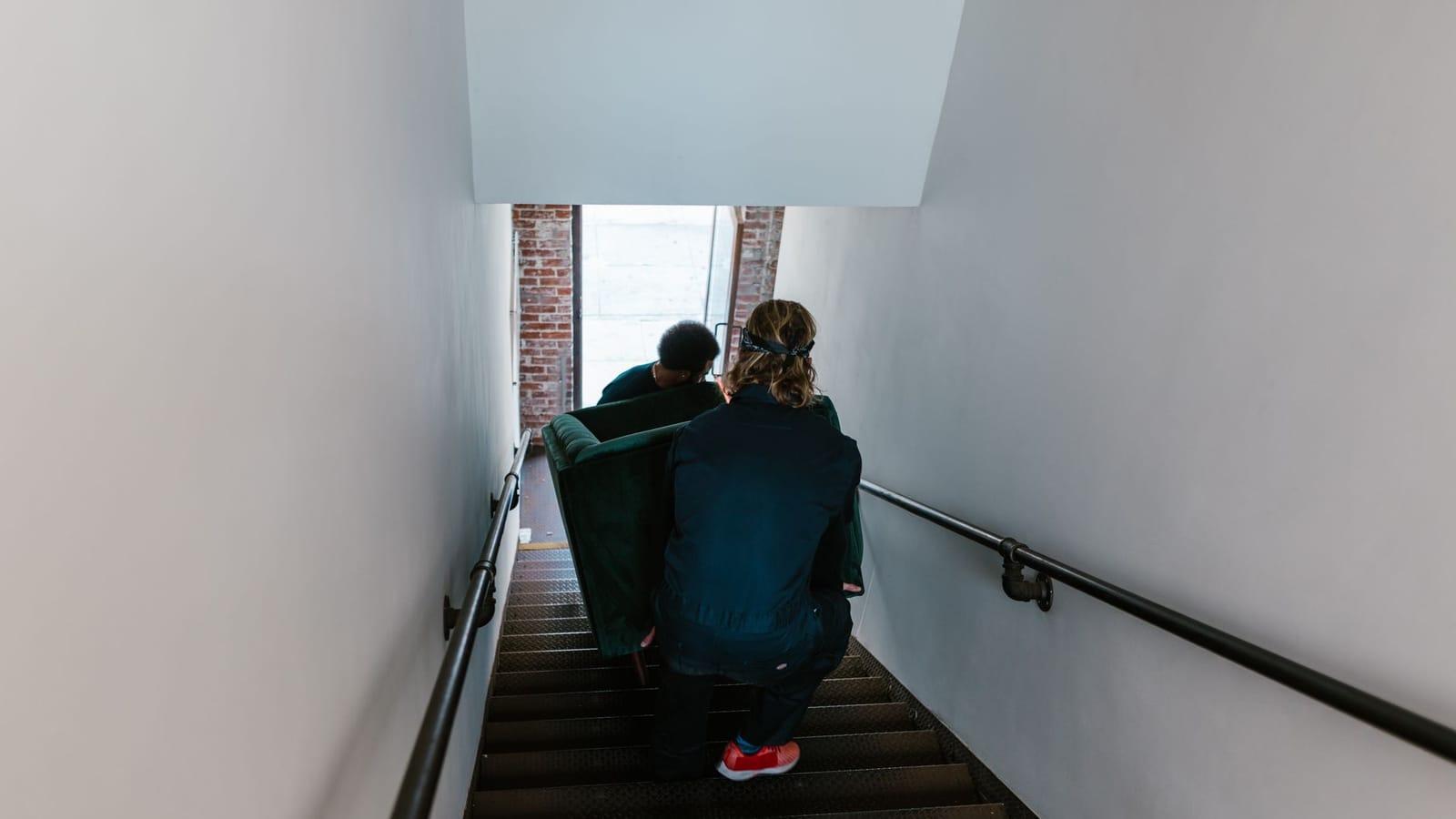
You asked three friends for a hand and they said yes. On Saturday at nine they are standing in your hallway, looking at you. You are still closing the last kitchen box and you don't know who should do what. At eleven one of them has to leave, and the sofa is still in the living room.
Help from a friend is a favour, and a favour has two limits: it ends at a set time, and nobody has put it in writing. It works when the person asking has already decided how to use it.
A favour has a time slot
"Can you give me a hand on Saturday?" is an open-ended question, and that is why it is hard to say yes to. "Can you give me a hand on Saturday from nine to one?" is easier to accept, and people keep to it: someone who knows when it ends does not leave halfway through.
To work out how many hours to ask for, start from the work, not from the people. On moving day, with the boxes ready, what is left is carrying them out, loading, unloading and taking them to the right rooms. Then look at the pieces that need two people. There are only a few, and you can spot them with three simple questions. The time slot is built around them.
Adding people does not always make the day shorter. On a narrow staircase only one person gets past at a time, and in a small two-room flat full of boxes three extra people get in each other's way at every door. In a small home, ask fewer people for more hours.
One job per person, given the night before
The trouble with the morning is that everybody asks you. You avoid it by giving each person one job only, chosen according to what they are good at and what they are able to do.
- The driver. If the van is rented, one person drives it, always the same one. What you can drive on a car licence is in the article on rental vans.
- The carriers. The people who can lift without back trouble. They are the ones who carry the two-person pieces.
- The person at the new home. They open up, take in the boxes and say where each one goes. How to split the day between the two homes is covered in moving day.
- The person who carries nothing. A friend who cannot lift is still useful: they look after the children, walk the dog, fetch lunch, put the bed back together in the new home with their own drill.
The night before, send everyone the same message: the address of both homes, the start time and the finish time, where to park, which floor and whether there is a lift, and each person's job with their name next to it. Add two practical lines: closed shoes with soles that grip, and work gloves for anyone who has them.
When they arrive, everything is already closed
Your friends' hours are for moving things, not for packing. If at nine you are still filling boxes, the people who came to help are left waiting. So the night before:
- Every box is full and closed, and the boxes are near the door, not scattered around the rooms.
- The furniture that comes apart is already apart, with the screws in a bag fixed to the piece. How to do it without losing anything is in taking furniture apart and putting it back together.
The way the box is made matters too: the person carrying it did not pack it, and needs to be able to pick it up without asking how. A Cangubox closes without tape: the lid has two hinged flaps, and you just fold them down until they lock. The handles sit in the two short sides: one hand on each, and the crate stays in front of whoever is carrying it. And they all measure 60 × 40 × 36 cm: whoever loads the van is stacking crates of the same size.
Where there are no steps, lift included, you can use the Dolly, the wheeled trolley that comes with every rental and takes up to 400 kg. You stack the crates on top, and one friend pushes the whole stack instead of making one trip for each box. On the stairs it is back to carrying, one crate at a time.
You decide the weight when you fill the boxes, not your friends when they lift them. Each Cangubox takes up to 30 kg, but that figure is what the box can bear, not what a person can carry: the site's rule is that a box you cannot lift comfortably needs to be made lighter, and heavy things like books are split across several crates. The article on lifting shows how to do it safely: pass it on to your helpers.
What you don't ask a friend to do
Some things are not a favour to ask for. The piano, your grandmother's antique wardrobe, the fridge that has to go up four floors of narrow stairs. For these you call in professionals, even for a single piece and for one hour. How to choose between doing it yourself and a removal firm explains it in full, and there is also the middle way: the firm moves the furniture, and you and your friends carry the rest.
There is also a reason beyond the effort: something you care about, broken on the stairs by a friend, becomes an issue between the two of you.
One last thing: you return the favour. You buy lunch, and the next time one of them moves house, you go.
Before you message anyone, write down the jobs: who drives, who carries, who stays at the new home, who carries nothing. Then find a name for each line, and ask each person for that job and that time slot. You choose the crates and the Dolly on the kits page.