Leggi questa guida in italiano
Moving checklist: what to do, week by week
What to do a month before, two weeks before, the week of the move and on the day itself. Including the things people always find out about too late.
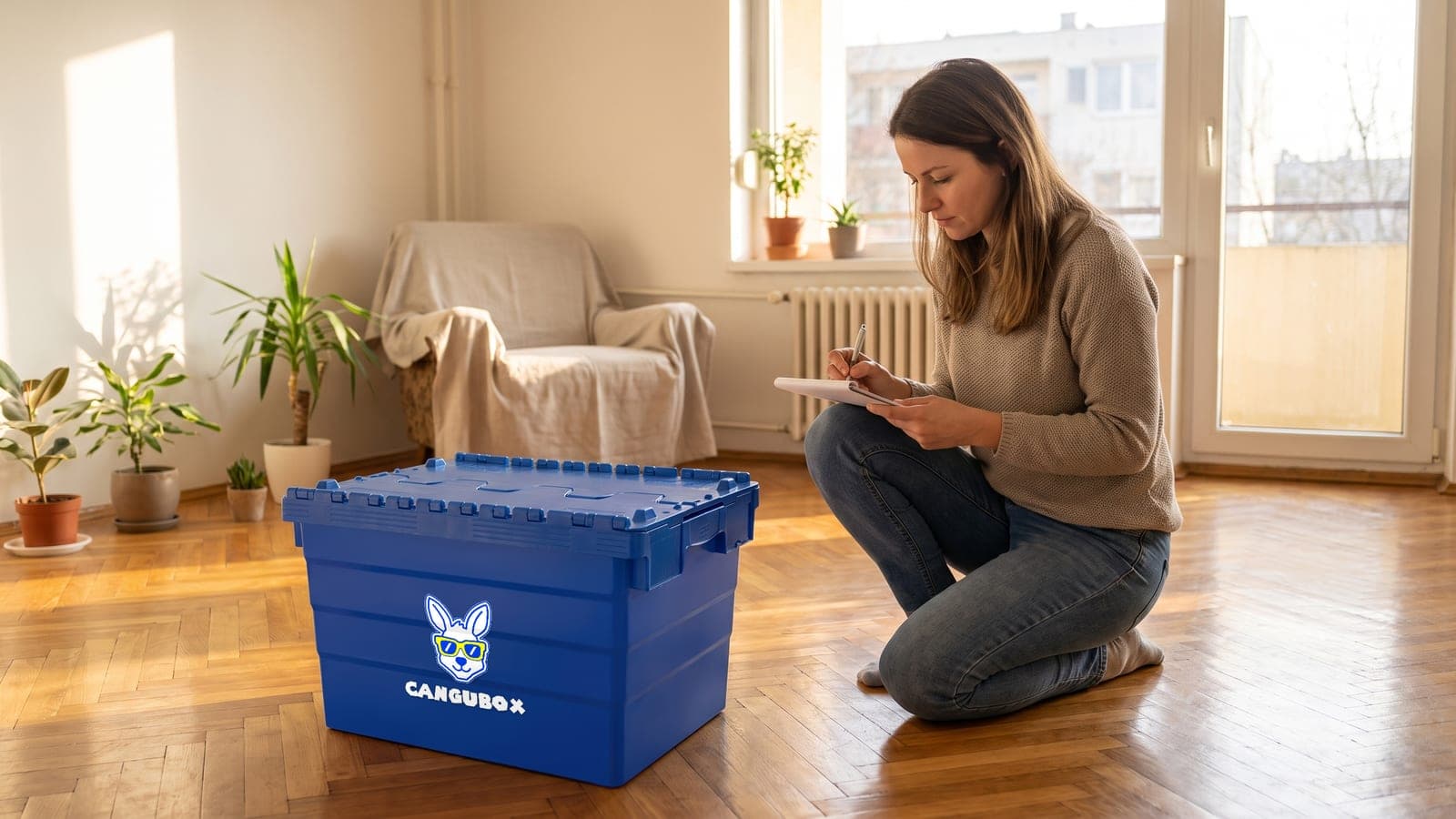
A move hardly ever goes wrong because of one big thing, while a pile of small things put off is enough to ruin it: the contract you never cancelled, the furniture hoist you never booked, the parking permit requested the day before. None of these is a disaster on its own, but together they get you to moving day with half the house still to pack and a van double-parked outside.
Here is the order in which to tackle them. If you have less time than the timeline below, do not skip the stages: squeeze them. The order matters more than the calendar, because almost everything that can hold you up depends on someone else: a council office, a supplier, a building manager, a technician.
Two months before
Two months out there is no need to pack anything yet; all you have to do is set in motion the things with long waiting times, the ones you cannot catch up on if you ask late.
Start from the dates you actually have. The day you leave the old home and the day you can get into the new one are two different dates, and the gap between them decides what kind of move you will have. If you can hold the keys to both for a few days, everything changes: you can move in several trips, clean at your own pace, and place the furniture before the boxes arrive. It costs a few extra days of rent, or of two mortgages overlapping, and to be fair it has one drawback: with an overlap people relax, the move spreads across two weeks, and the last things stay in the old home until the very last day. If instead you have one fixed date, better to know it now and plan accordingly.
Decide what you are not taking, starting with the furniture. Selling a sofa or giving away a bookcase takes weeks, not an afternoon: the listing, the messages, the appointments that fall through, someone who has to come and load it. And bulky items for disposal need a collection booked, with waiting times that in many cities are not short. This is the moment, not the one when the boxes are already in the house.
If you have school-age children, move on this now. Enrolments, transfer clearances (the nulla osta), moves between schools all have their own timings, and they do not compress. The same goes for pets, if you are changing municipality.
One month before
Fix the date and book the people you need. If you need a removal company or a van, this is the time: on end-of-month weekends and at the end of August everything gets booked up. Ask for at least two quotes and have them spell out what is included: dismantling, packing, floors without a lift, a furniture hoist.
Go round the utilities. Electricity, gas, water, internet: check the notice periods for cancelling or transferring each contract, because on some supplies it can take weeks. Internet in the new home is the one that almost always arrives late. Get it started now, and if you work from home think about a plan B for the first few days.
Start throwing things out. This is when you still have time to do it calmly. Everything you do not take is something you do not pack, do not carry and do not put away again. The useful question is not "will I need it?" but "would I buy it again today?".
Check the access. Lift, goods lift, width of the stairs, distance from the spot where the van can stop. This applies to both homes, and it is the first information removal companies ask for. If you need to book the building's goods lift or notify the building manager, do it now.
Paperwork and admin
This is the part almost nobody puts on a checklist, and sure enough it is the part that drags on for months after the move. Nothing here is urgent, but these are long procedures, so it is worth starting them early unless you want them still open once the move is over.
The change of residence is requested from the council (the comune) after you have actually moved in, and from there a verification starts that does not depend on you. In the meantime, though, there are things you can update straight away that save you trouble later: bank, insurance (car and home), subscriptions, online shops where you have a saved address, your GP if you are changing local health authority (ASL). Your driving licence and vehicle registration document have their own address-update procedure: find out how it works beforehand, not when you need it.
Two practical habits. First: photograph the state of the home you are leaving and the one you are entering, on the very day you hand over or collect the keys. Walls, floors, bathroom fittings, windows and doors. If a deposit is involved, those photos are worth more than any argument. Second: keep a single folder, physical or on your phone, with contracts, quotes, meter readings, receipts. During a move, scattered documents are the first thing to go missing.
For post that keeps arriving at the old address there are paid forwarding services. They are not essential, but they buy time, and time is exactly what is short in the weeks after a move.
Two weeks before
Get the boxes. If you are renting them, book them now: pick the delivery date and stop thinking about it. If you are buying them, bear in mind that you will also have to get rid of them afterwards, and that used cardboard takes up as much room as new. If you do not know how many to start from, the site has a way to get a number without counting by hand.
Start packing what you do not use. Books, ornaments, out-of-season clothes, the cellar and the storage cupboard. It is 40% of the work and it can be done without getting in the way of everyday life.
Apply for the parking permit. In many cities you need a permit to occupy public land with the van. Timings vary from one council to the next: find out now, not the week before.
Decide where the furniture goes in the new home. Ten minutes and a sheet of paper are enough. You need it for labelling, and whoever unloads will need it so they do not ask you thirty times "where does this go?".
The week before
Empty the freezer. It needs defrosting, and that takes time. From here on, buy only what you will use up.
Pack the "first day box". Toilet paper, soap, towels, chargers, a change of clothes, medicines, something to eat, a couple of tools. It is the one box that has to travel with you and not in the van.
Label with the person unloading in mind. Write the destination room in the new home, not the room it came from. It sounds obvious, but almost nobody does it, and it decides whether you unload in half an hour or spend the afternoon shifting boxes from one room to another.
Photograph the connections. The back of the TV, the router, the sound system. In three days you will not remember which cable went where.
The people helping you
If friends are giving you a hand, the problem is not finding them: it is organising them. A group with no roles in a small flat gets in its own way, and you are the one stopping every two minutes to answer a question.
A few rules are enough, starting with the number: you need fewer people than you expect, and in a one-bedroom flat, beyond four or five, they queue on the stairs. Someone has to stay at the door of the new home sorting boxes into the right rooms, and that someone must not carry anything heavy, or they disappear. Give precise times and stagger them: whoever dismantles arrives early, whoever unloads comes later. And do not let anyone pack without instructions, because mixed, unlabelled boxes are what you find yourself with two weeks later.
There is then an awkward part to say, which is that friends are free but they are not insured. If you have a piano, a safe, heavy furniture or narrow stairs, a removal company costs money and solves the problem. A sofa that wrecks a banister, or a back that seizes up, costs a lot more, in friendships too. If there are small children or pets, that day it is better for them to be somewhere else: the doors stay open for hours.
The day before
What matters on this day is getting to the evening with nothing left open, apart from the first day box.
Dismantle what you decided to dismantle and put screws and small parts in bags taped to the piece of furniture itself, not in a shared box. Unplug the fridge, so it has time to drain. Stack the boxes near the door, sorted by room: whoever loads goes much faster if the piles are already made. Clear the corridors.
Then the boring things that always get forgotten: charge your phone and power bank, sort out how you will pay the movers, check the weather. If it rains, you need a sheet or some cardboard for the new floors, and something to cover the mattresses. Do the heavy cleaning of the empty home now, if you can, so the next day only a quick sweep is left. And then go to sleep, because a move is a physical day and things almost always get broken when whoever is carrying them is tired.
Moving day
- Keep documents, keys, computers and valuables with you: they do not go in the van.
- Do a last round of the empty home, opening every cupboard door and every drawer. Something always gets forgotten in a high wall cupboard or behind a door.
- Keep an empty box aside for the orphans of the last round: there always are some.
- Read the meters and photograph them, in both homes.
- Before the van drives off, look inside right to the back. Small things stay in the corners.
- Hand the keys to whoever should have them and check you have the new ones, including the ones for the main entrance, the cellar and the letterbox.
The week after
There is no need to unpack everything at once: start with the bedroom and the bathroom, so the first night is liveable. The kitchen the next day. The rest can wait.
A tip that saves quite a bit: in the first week, buy nothing for the new home apart from consumables. The shelves, small cabinets and storage boxes bought on impulse on day three almost always end up in the wrong place, because you have not yet worked out how you live in the rooms. Wait until you have unpacked everything.
In the meantime, check the things it is better to discover straight away: sockets that do not work, slow drains, windows that do not close, signs of damp. If you are renting, report them to the landlord in the first few days, not in two months. Also check that the utility transfers went through, and compare the first bills with the readings you photographed.
After a month, open the boxes that are still closed and look at what is inside before deciding whether to keep it, because almost always it is stuff you could have left behind.
If you rented the boxes, from Cangubox or from anyone else, the only thing to remember is that at the end of the rental someone comes to collect them. You do not have to flatten them or take them anywhere.