Leggi questa guida in italiano
Mould in your new home: where to put furniture and boxes in the first weeks
Why mould appears in the first months after a move, which walls to keep clear and where to leave the boxes while you unpack.
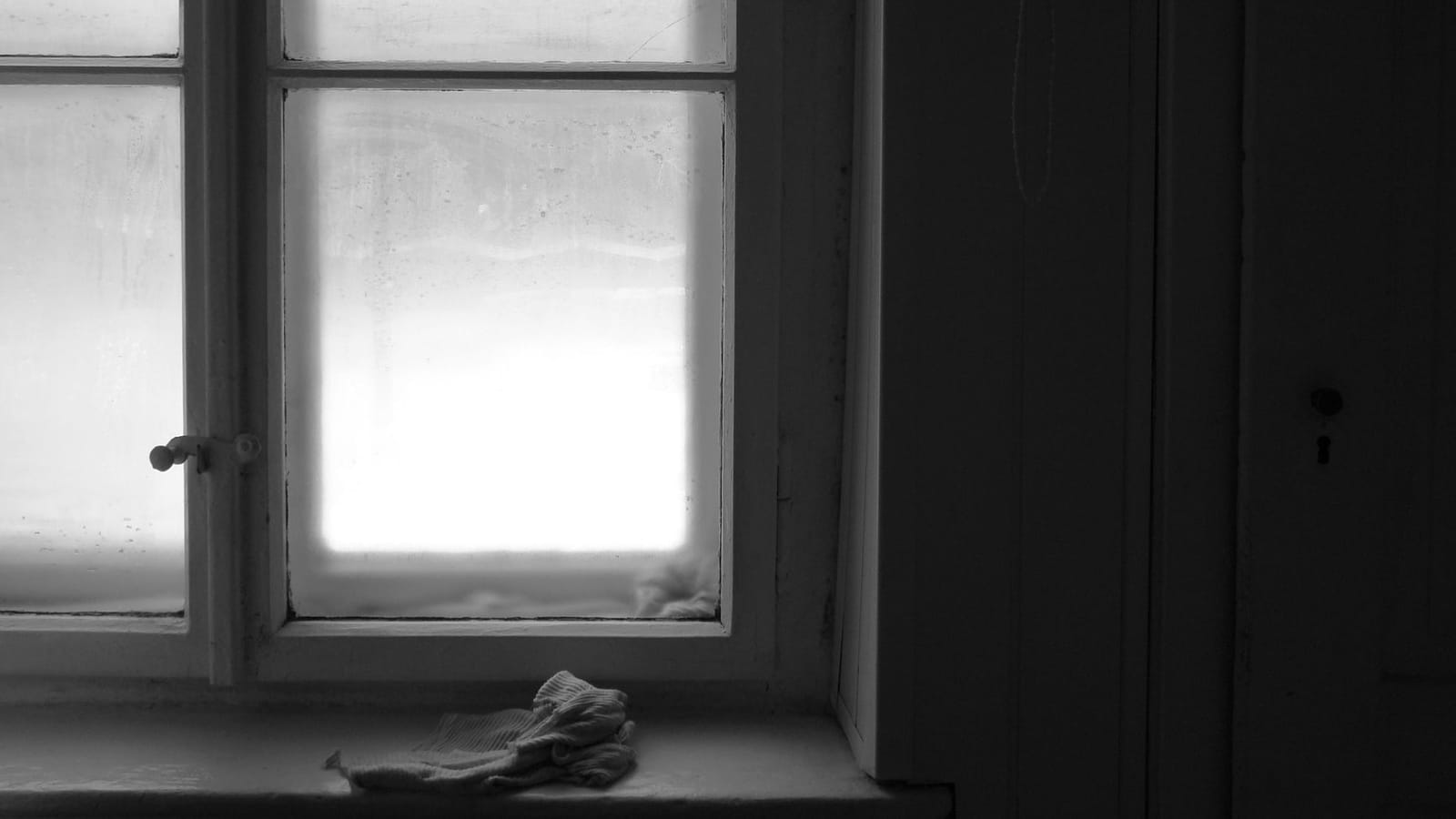
It is November, and you move into a flat that has been shut for months. On the first day you push the wardrobe against the longest wall of the bedroom, the one with the window onto the courtyard, and for two weeks you dry your washing in the living room because the washing machine is not connected yet. In February you move the wardrobe to look for a sock and find a black stain climbing up from the skirting board.
Nobody did anything seriously wrong. These were three ordinary choices, made at the moment the home was most at risk, and each could have been made differently on the day, at no cost.
Why the first weeks
Mould needs a surface that stays wet. That water usually does not come from a pipe but from the air: warm air full of vapour touches a colder surface and leaves its water there. It is what you see in the morning on steamed-up windows.
In the first weeks the two conditions come together. The walls of an empty home are cold, and they take days to warm up even with the radiators on. Meanwhile you are producing more vapour than usual: showers, pans on the hob with no cooker hood fitted yet, washing dried indoors, and on moving day people going in and out with the doors open. If work has just been done in the flat, the plaster and paint also have to finish drying, and the water they lose ends up in the air: that case has its own article, moving in before the building work is finished.
The result is that the home has its dampest air in exactly the period when it has its coldest walls.
Where to put the furniture
A piece of furniture pushed against a cold wall, meaning one that faces outside, creates a gap behind it where the air does not move. That is where the vapour settles, and where nobody looks for months. Three things to decide while the room is still empty:
- Large furniture on the inside walls, when the layout of the room allows it: wardrobe, bookcase, headboard.
- If it has to go on an outside wall, pull it away from the wall. Leave a gap you can slide a flat hand into. It does not look like much, but it is enough to let air move behind the furniture.
- Radiators stay clear. Furniture or a stack of boxes in front of a radiator holds back the heat that should warm the wall. Your new home in autumn covers the boiler and the valves.
After two or three weeks, take a torch and check behind the furniture that stands against outside walls. A grey patch or a musty smell, found now, calls for moving a piece of furniture and opening the windows every day. In February it means a wall to treat and a wardrobe to empty.
The boxes while you unpack
The furniture finds its place in the first few days. The boxes stay around for weeks, stacks to open one at a time. And they almost always land in the spaces nobody uses, meaning the corners and the bare walls. In a room that has just been furnished, the bare walls are often the outside ones.
Cardboard is paper. It soaks up moisture from the air and the floor and keeps it, so a stack pushed against a cold wall becomes the wet surface itself, with clothes, books and papers inside. A Cangubox is rigid polypropylene: its plastic wall does not absorb water, and if you find condensation on it you wipe it off with a dry cloth. The lid closes with its two hinged halves locking together, with no tape, so you can open it and close it again every time you need something.
Two rules apply to any container:
- The stack stays in the centre of the room, or next to an inside wall, never in the corner where two outside walls meet and never on the cellar floor.
- What goes in damp stays damp. A closed box dries nothing. Washing that is still slightly damp from the airer gets put away when it is dry, not before.
Open the boxes of fabric and paper first: clothes, bedding, books, documents. There are separate articles on clothes and books. Once empty, with the flaps open, the Cangubox nest inside each other until collection, and leave the walls clear while they warm up.
What to do in the first week
- Before you bring the furniture in, walk round the empty rooms and note which walls face outside.
- Decide where the wardrobes and the bed go, starting from that list.
- Open the windows wide for a few minutes, several times a day, especially after a shower and after cooking.
- Dry your washing in a room where you can open the window, with the door shut on the rest of the home.
- Keep the radiators on, including in the rooms where you are not sleeping yet.
- In two weeks, torch in hand, look behind the furniture.
You can choose your boxes on the kits page.