Leggi questa guida in italiano
Your new home in autumn: the boiler, the radiators and switching the heating on
When you are allowed to turn the heating on, whose boiler it is if you rent, and what to check on the radiators before the first cold evening.
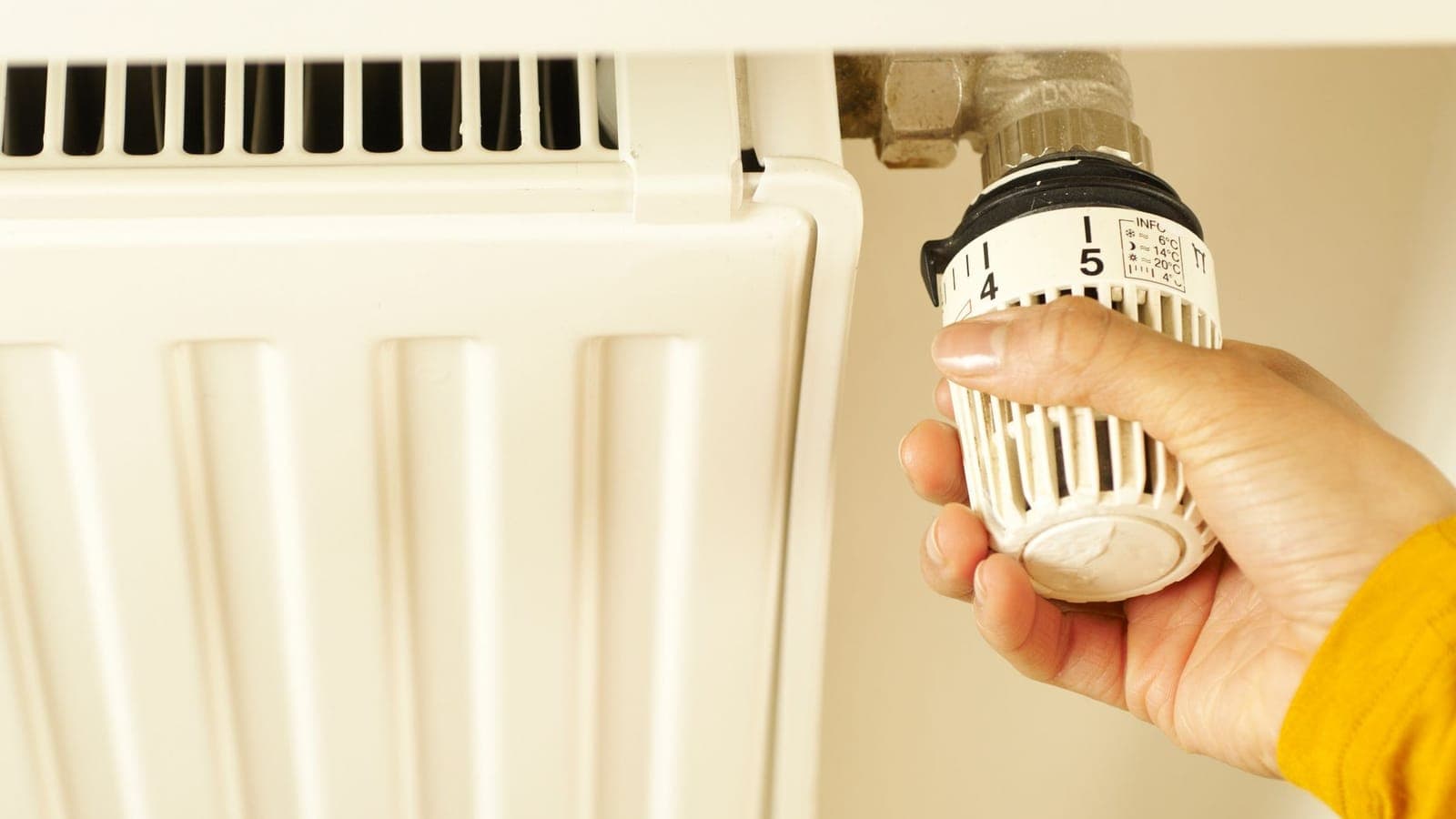
You got the keys at the end of September, and for two weeks you did not need the heating. Then the first cold evening comes. You turn the thermostat dial and nothing happens, or the radiators stay warm at the top and cold at the bottom. And you find out that you do not know where the boiler logbook is, who has to call the engineer, or even whether the heating can be switched on yet.
When you can switch it on, and who decides
The national calendar is set out in article 4 of Presidential Decree 74 of 2013, which divides Italy into climate zones. Milan is in zone E, and for zone E the decree allows heating from 15 October to 15 April, for up to fourteen hours a day, between 5am and 11pm. Before 15 October or after 15 April the heating can only go on if the weather justifies it, and even then for no more than half the usual hours.
The local council can change these limits with an order from the mayor, and Milan has done so for some years. For the 2025/2026 season, order no. 41 of 3 October 2025 set thirteen hours a day, between 5am and 11pm, and a maximum temperature in homes of 19 degrees, with a 2 degree tolerance. On 11 October 2026 the council's page on the heating calendar, last updated on 16 June, still shows that season. Before you set the thermostat, open it and see whether the new order is out. Outside Milan, ask the same question on your own council's website.
If the building has central heating, you do not decide when it goes on: the person responsible for the system is the building manager (the amministratore), and you ask them about the hours.
Whose boiler is it when you rent?
With a boiler of your own, the answer is not the one people expect. The definition is in annex A of Legislative Decree 192 of 2005: in a single home, the person responsible for the heating system is the occupant, on whatever basis they live there. The owner is responsible only if the home is not rented out. And article 6 of the 2013 decree gives the person responsible the operation, management, checks and maintenance of the system.
So if you rent, the boiler checks are your job, and you are the one who calls the engineer. How the costs are split with the landlord is in your tenancy agreement, and it is better to read it now than in January.
Then there is the system logbook (libretto di impianto). In Lombardy, the instructions from the regional register of heating systems (CURIT) say that when a property passes to someone else, on whatever basis, the paper logbook must be handed from the person leaving to the person taking over. Ask for it on the day you get the keys, together with the boiler manual, and look through it: it shows when the last check was done and who did it. If you are leaving a rented flat, the logbook stays there for the next person, and it belongs on the list of things to sort out before you hand the flat back.
Before the first cold evening
On the first suitable day, in daylight, walk round the system. There are five checks, and none of them needs special tools.
- Find the boiler and the thermostat. If the thermostat can be programmed, look at the times that are set: they may still belong to whoever lived there before you.
- If the boiler is your own, look at its pressure gauge, the small dial with a needle. The right reading is not the same for every boiler: the manufacturer's manual gives it, and that is what you compare it with.
- Switch the heating on and wait. Then touch each radiator at the top and at the bottom. If the top is cold and the bottom is hot, there is air inside.
- For the air there is a small bleed valve, high up on one side of the radiator. Hold a cloth underneath, open it slowly, and close it as soon as water comes out instead of air. Afterwards, check the pressure gauge again: letting the air out lowers the pressure in the system.
- Check the knobs on the radiators. If there are thermostatic valves, the ones with numbers, see where they are turned to: a closed valve leaves the radiator cold even when the boiler is on.
If something is not right, for example the boiler locks out or the pressure keeps dropping, that is a job for the engineer, not for you.
Boxes and radiators
Then there is a problem that comes in the weeks while you unpack. The boxes waiting to be opened end up along the walls, and the radiators are along the walls. A stack in front of a radiator takes away the heat that should warm the room, and it hides the valve you would want to turn in the evening.
The rule is simple: stacks go in the middle of the room or against a free wall, and every radiator has to stay uncovered and within reach. A Cangubox is rigid, closes with a flat lid and takes another box on top even when it is full and shut, so the stack can stand in the middle of the room without leaning on anything. The ones you have already emptied, with the flaps open, nest inside each other and take up the space of one low stack until collection.
If you move between October and November, the boxes in front of the radiators are the ones to open first, and for the order of the rest there is your first day in the new home.
So on the day you get the keys, three things: the logbook in your hand, your council's page on the heating calendar, and a walk round the radiators in daylight. That way, on the first cold evening, you just switch it on.