Leggi questa guida in italiano
The fitted kitchen when you move: take it or leave it
Before you take the kitchen apart you need three answers: who owns it, whether it fits the new home and who disconnects gas, water and power.
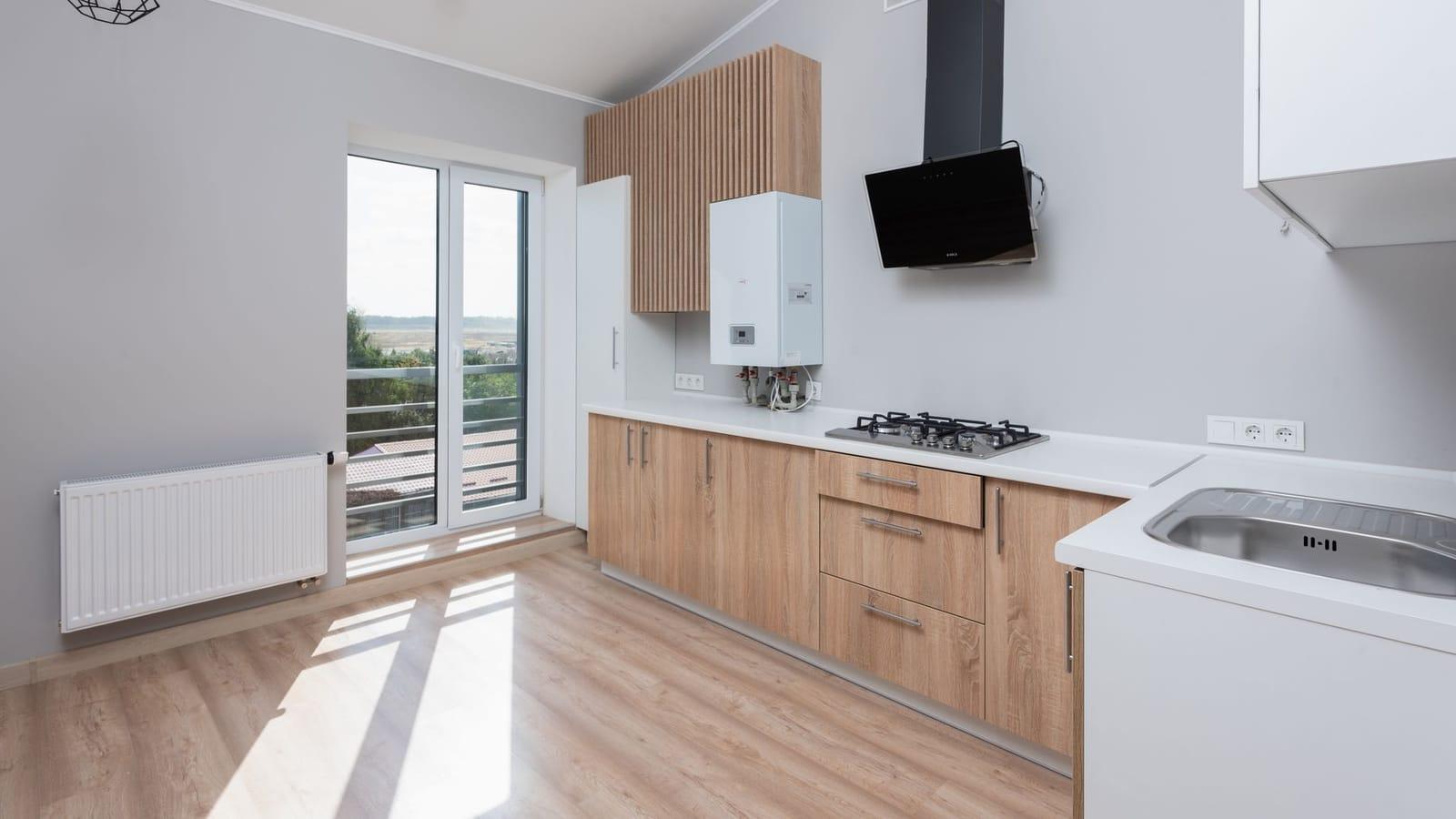
The kitchen is the biggest piece of furniture in the home, and it is nearly always the last one you think about. You have already measured the wardrobes, the books are in boxes, and one evening you realise you have decided nothing about the wall with the sink, the hob and the wall units. Taking it with you seems obvious, because you paid for it. Leaving it seems a waste. And in between there is a job nobody has given you a quote for yet.
Three questions decide it, in this order. If the first one settles it, you do not need the other two.
First question: is the kitchen yours?
In a rented flat the kitchen was often already there when you moved in, and in that case it belongs to the landlord: you do not take it apart, you leave it as it is and hand it back clean, like the rest of the flat when you hand back the keys.
If you bought it yourself and you rent, work out what you want to do with it before the landlord asks. You can leave it, but put it in writing: that it stays, in what condition, and whether the landlord pays you for it. Without a written agreement, the question of who removes it and who pays for it comes up later, when you have already handed back the keys.
If you are selling, the kitchen may or may not be part of the sale: check what the preliminary contract (the "preliminare") says before you take down a single wall unit. What is written there is what the buyer expects to find on the day of completion.
Second question: will it fit the new kitchen?
A fitted kitchen is made of units, and units can move. The rest cannot. The worktop is cut to measure for that wall, with the holes for the sink and the hob in exact places, and in another room they nearly always end up in the wrong spot.
Before you decide, take three measurements in the new home.
- The length of the free walls, corner to corner, minus doors, windows and radiators.
- Where the water and the drain come out, because the sink goes above them, and the dishwasher goes next to the sink.
- Where the gas arrives, or the line for an induction hob, because it decides where the hob goes, and so where the extractor hood goes.
Then draw the wall on a sheet of paper and try to fit the units you have. If the base units fit but the sink ends up far from the drain, both the worktop and the plumbing have to be redone.
Look at the condition of the units too. Base and wall units are nearly always chipboard, and chipboard holds screws well only the first time. A kitchen that has already been taken apart and put back together once, or with base units swollen by water under the sink, reaches the new home in worse shape than when it left.
Third question: who takes it apart?
If you decide to take it, the work has two parts, and what separates them is not skill.
The things you do not disconnect yourself are the gas and the power. A qualified gas engineer disconnects and reconnects the gas. For an oven or induction hob connected to the mains without a plug, you need an electrician. What to do with the appliances in the days before is covered in a separate article.
You can do the rest yourself, in a set order.
- Empty all the wall units and all the base units.
- Take off the doors and drawers, leaving the hinges on the doors.
- Turn off the taps under the sink and undo the trap, with a bowl underneath.
- Unhook the wall units from the wall, with two people: one holds, the other unscrews.
- Take off the plinth, then the worktop with the sink, then the base units.
The worktop is the most fragile piece: it is long, and the two holes in the middle weaken it. It travels upright on its long edge, never flat. If you are using a removal company, ask in the quote whether taking the kitchen apart and putting it back together is included: you cannot take it for granted, and you need to know beforehand.
The weeks without a kitchen
What nobody plans for is the time in between. Between the day you take it apart and the day the kitchen is back on the wall and connected, days go by, sometimes weeks, if the gas engineer's first free date is some way off. During those days plates, pans and utensils have no cupboard to go in.
They go in boxes, and the boxes become the cupboard. You open them in the evening to cook and close them again in the morning. With cardboard every opening means cutting tape. A Cangubox closes without tape, with the two halves of the lid locking into each other, and it still stacks when closed and loaded: the stack stands against a wall instead of spreading across the floor. How to prepare what goes inside is in the articles on plates and glasses and on pots, pans and the pantry.
Keep one box just for the stopgap kitchen: two plates, two glasses, a pot, a frying pan, a knife, the coffee. It is the one you open every day, so it sits above the others.
In short: check who owns the kitchen, measure the new wall before you touch a screw, book the gas engineer as soon as you have your moving date, and get the stopgap kitchen box ready before you take down the first wall unit. You can book Cangubox from this page.