Leggi questa guida in italiano
Appliances: what you need to know before you move them
Fridge, washing machine and oven get ready in the days before, not on the morning of the move: what to empty, what to lock and what to leave to a fitter.
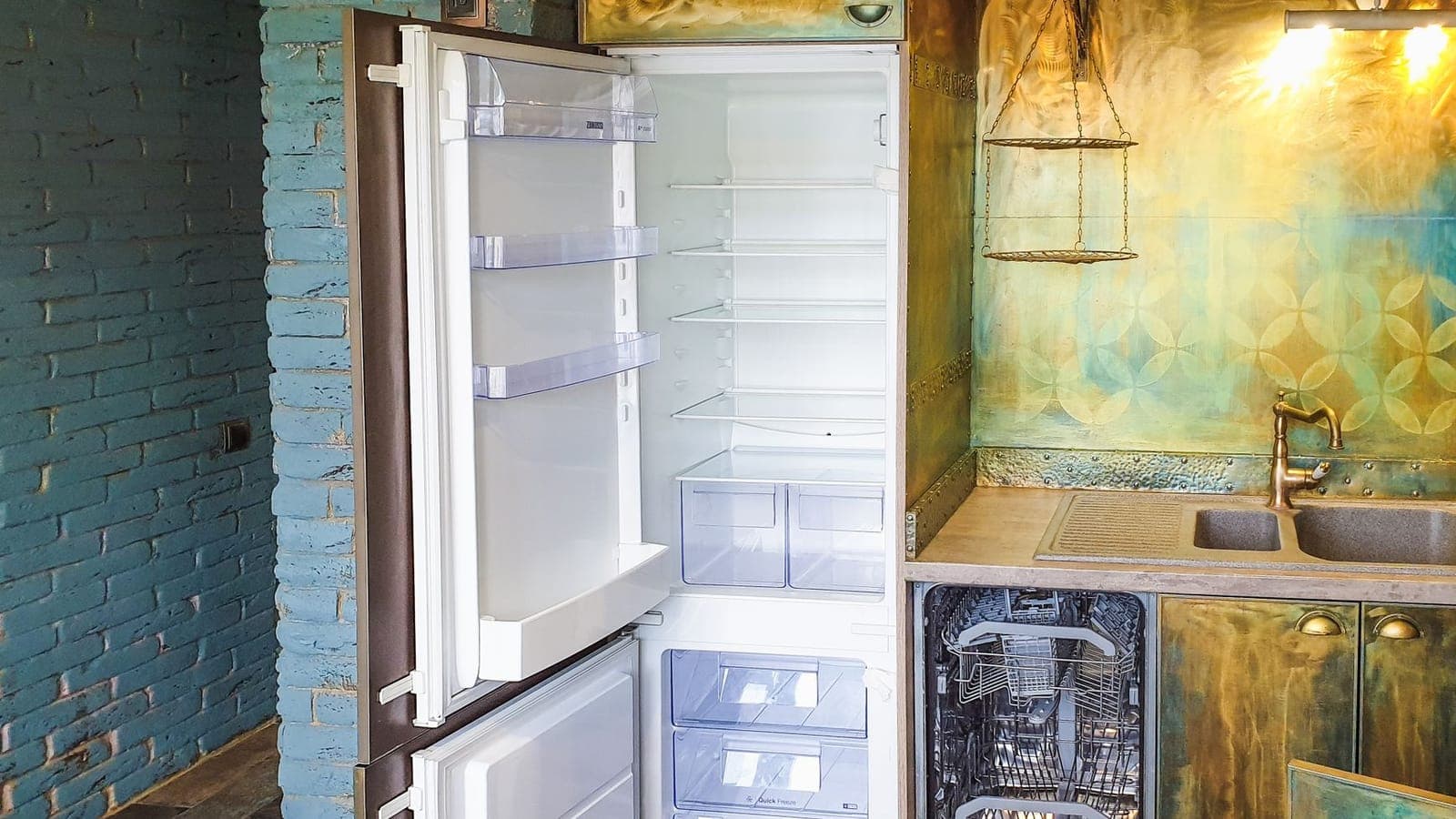
Of everything in the house, appliances are the one thing you cannot leave until the morning itself. You can take a wardrobe apart at the last minute if you have to, and you can empty a bookcase in half an hour. A fridge is different: unplug it once the van is already outside and it leaves with melting ice inside, which comes out on the journey. A washing machine is different too: it travels with a heavy drum, and if you do not lock that drum it moves around inside the machine.
So the real work happens in the days before, and there is not much of it. But it has to happen in order, because part of it is waiting time, and waiting time cannot be squeezed.
The fridge wants days, not hours
Start with the fridge, because it is the one that needs the most time.
Two or three days before, stop filling it and start eating what is in there. The day before, empty it completely, pull the plug and leave the doors open. From then on it defrosts, and how long that takes depends on how much ice was inside. You cannot know in advance, which is why this step belongs to the days before and not to the morning list.
Put towels or a shallow basin underneath, because that water ends up on the floor. Once it has stopped dripping, dry the inside and the door seals properly, then leave the doors resting against the frame rather than shut: switched off, wet and sealed, a fridge picks up a smell, and that smell stays.
It travels upright. If there was no other way and it travelled on its side, do not plug it in as soon as it arrives: the manual for your model says how long it has to stand upright before it gets power, and that figure is its own. You cannot guess it by looking at the machine.
Washing machine and dishwasher: water first, then the bolts
Here the work comes in two steps, and the first one is getting out the water you cannot see.
Turn off the tap and run a short programme or an empty spin, so the pump clears whatever is left in the drum. Then undo the inlet hose, with a basin underneath, because there is always water between the tap and the machine. The drain hose empties if you lower it into a bucket, and the filter at the bottom opens onto a cloth: water sits in there even after a drain cycle.
The transport bolts are the other half. On the back of the washing machine you will find the holes, closed with plastic caps: those bolts hold the drum assembly still, and they came with the machine, in a bag that almost nobody keeps. If you have them, put them back. If you do not, the retailer or the service centre sell them by model, and you order them now: moving day is not the moment to find out they are missing.
A dishwasher has no transport bolts, but it holds the same still water in its base and its hose, and it has baskets, which either come out or get tied down, because otherwise they slide every time the van brakes.
Appliance hardware gets lost in a different way
Every machine leaves behind a small pile of little things: hoses, seals, transport bolts, the cable if it comes off, the filter key, the manual, the caps from the holes. One at a time it is nothing. All together it is a box, and you need all of it at the same moment, when you hook everything back up.
For furniture the method is a bag taped to the piece itself, and it works. On an appliance there is no such hidden spot: the back of a washing machine is the surface the straps run across, and the side is the one that slides on the trolley. A bag taped there sits exactly where the machine gets strapped and pushed.
So the small parts go in one place, and that place travels with you rather than with the machine. Cangubox have their handles cut into the short ends, and the lid clips shut on its own: there is no tape to cut through when you need a seal halfway through the day. Cables, documents and small items are precisely what every appliance leaves in your hands.
What you do not disconnect yourself
Gas is the sharp line. A gas hob or a gas oven is disconnected and reconnected by a qualified fitter: it is work on the gas system, and whoever does it has to hold the qualifications required by law. This is not an extra precaution, it is how it is done.
Then there is everything without a plug: a built-in oven or an induction hob wired straight into the mains needs an electrician, and a split air conditioning unit needs a refrigeration engineer, because there is refrigerant gas inside that has to be recovered rather than released.
Removal firms do move appliances. Whether they also disconnect water and power is a question to ask along with the quote, because it is not a given, while gas stays with the fitter in any case. Knowing where that line falls tells you what is left to you, and if you are still deciding how to handle the move it is one of the items that count.
The short version: three days before you empty the fridge and order the bolts if they are missing, the day before you disconnect, defrost and get the water out, and you book the gas fitter early. On the morning of the move, as far as appliances go, you have nothing left to decide.