Leggi questa guida in italiano
How to pack pots, pans and the pantry for a move
Empty the pantry three weeks ahead, carry opened food yourself, and pack pots clean and dry with the weight at the bottom.
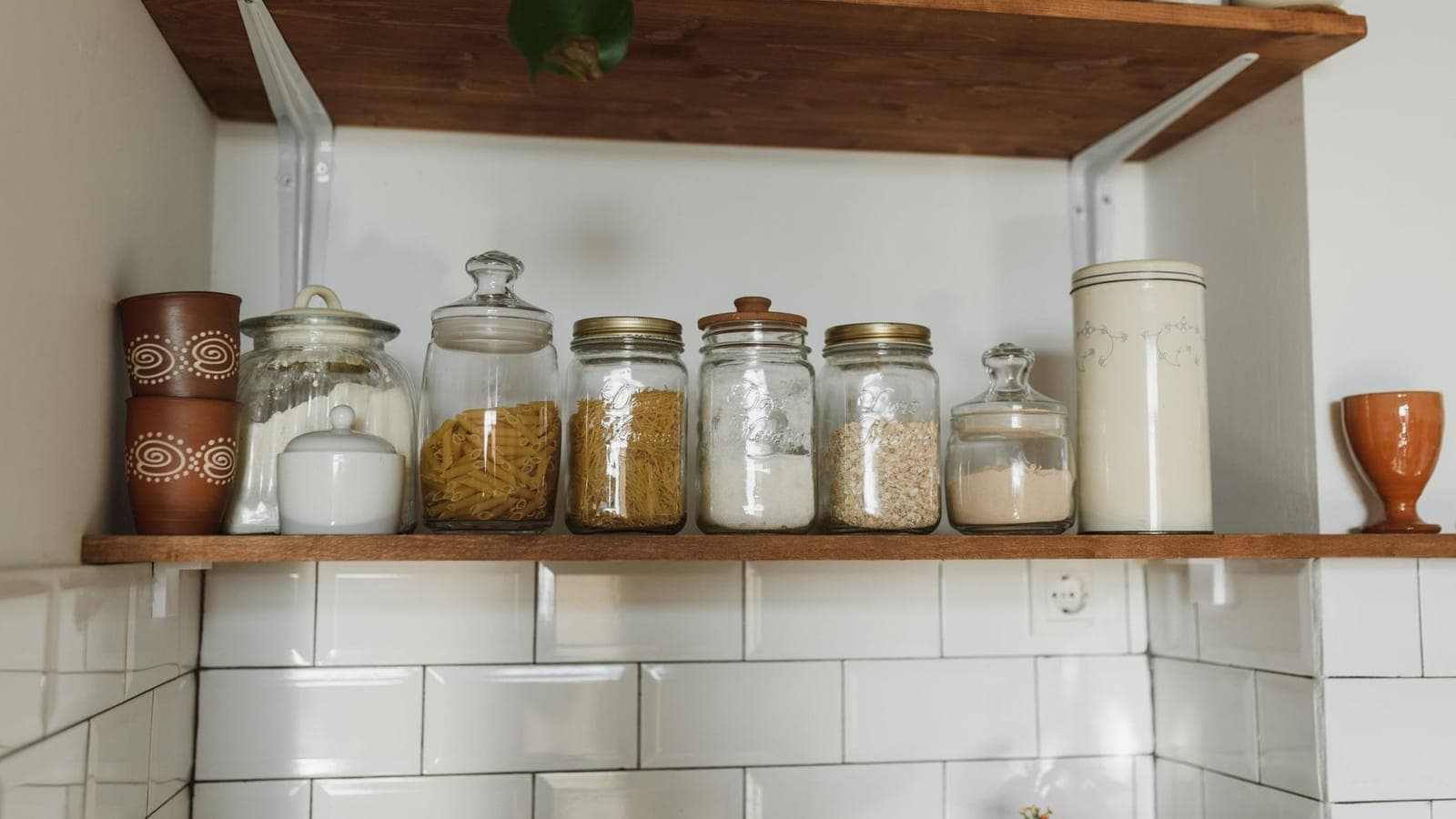
You open the pantry door to see how much there is to pack, and you find three opened packets of pasta, two jars of passata, a bag of flour held shut with a peg, six little jars of spices and a half-empty bottle of oil. None of these things is a problem on its own. Together they are the part of the kitchen you do not know how to move, and you usually leave it for the last evening.
Plates are different: you know they are fragile and you treat them that way. Pots and the pantry look like the easy part, and that is why people pack them in a rush. There are three decisions to make, in this order.
Empty the pantry before you pack it
Work on the pantry starts three weeks before the move, and it does not start with boxes. It starts with the shopping: from that day you only buy what you will eat before the move, and you cook with what you already have. The rice forgotten at the back of the shelf, the dried beans, the jar of sauce someone gave you at Christmas.
First, though, take stock. It takes ten minutes. Take everything out, check the dates and make three piles:
- To finish. The opened packets, anything that expires before the move, the frozen food. These become your meals for the next few weeks.
- To give away. Unopened packets you do not want to take and will not finish in time: a neighbour, a colleague, a friend who lives nearby.
- To throw away. Anything already past its date, and anything opened that you will not eat.
The freezer follows the same logic, with less room for delay. Empty it in the days before, because it has to be defrosted, and while it defrosts it keeps nothing cold. Whatever you find inside goes on the pile to finish.
The pile to finish has a benefit you only see at the end: every packet you eat is a packet you do not pack, carry by hand or put away in the new kitchen.
What goes in the boxes and what goes with you
What is left after three weeks splits into two groups, and the dividing line is the seal.
Sealed packs go in the boxes. Sealed pasta and rice, tins, glass jars that have never been opened, bottles with their original cap. Treat full glass like plates: wrap each jar in a sheet of paper or a tea towel, stand it upright, and fill the gaps between jars so that glass does not knock against glass on every bend.
Here the box gets heavy long before it is full. Jars and tins add weight quickly, and with a layer of full glass at the bottom you do not fill the box to the brim: half jars, half light things, like pasta, biscuits or the tea towels you need anyway.
Opened packs do not go in any box. Flour, sugar, coffee, the packet of pasta closed with a peg: they can spill on the way, and in a box that stays shut for two days they attract insects and leave a smell on everything else. The same goes for opened spices, even in a jar with a screw top.
The ones you want to keep travel in a bag you carry yourself, ideally in the car, together with oil, vinegar and opened bottles, which stay upright. It is the same rule that applies to cleaning products and liquids, and the article on the things that should never go in a box explains it in full.
Pots: clean, dry, and the weight at the bottom
How to nest pots inside each other and how to protect glass lids is already covered in the article on how to pack dishes. What is left here are the two things people get wrong before they even start.
The first: pots go in clean and dry. If a frying pan washed in the evening goes into a box while it is still damp, two days later the box opens with a musty smell. The same applies to a baking tray with a thin film of grease on the bottom and to a colander that is still wet. Wash what you are packing the day before, let it dry overnight, and only then put it in.
The second is weight. Cast iron, the pressure cooker and steel baking trays weigh much more than the space they take up suggests. They go at the bottom, with light things on top. A box of nothing but cast iron cannot be lifted.
This is where the shape of the box makes a difference, because the kitchen produces a lot of heavy boxes. The supplier states a load capacity of 30 kg for a Cangubox, and the real limit is still set by your back. The handles are recessed into the short sides, so you hold it with both hands in front of you without putting your fingers under the bottom. It stacks even when closed and loaded, and with the Dolly included in your rental, the heavy kitchen boxes can be stacked and pushed to the lift, instead of making one trip by hand for each.
Wrap knives one by one in a tea towel, with the blade covered and the towel held by an elastic band, or leave them in their block. Never loose among the utensils, because whoever empties the box puts a hand in without looking.
Then, on the last evening, keep out one pot, one frying pan, one knife and the coffee maker. They are the last things you pack and the first you open again.
All of this starts by opening the pantry today, not on the last evening. Make the three piles, stop buying what you will not eat before the date, and the box you were dreading becomes half a box.