Leggi questa guida in italiano
Do you have to empty the drawers? What can stay inside furniture when you move
Leaving things in the drawers saves boxes, but it depends on who carries the piece, how it travels and what is inside. How to decide drawer by drawer.
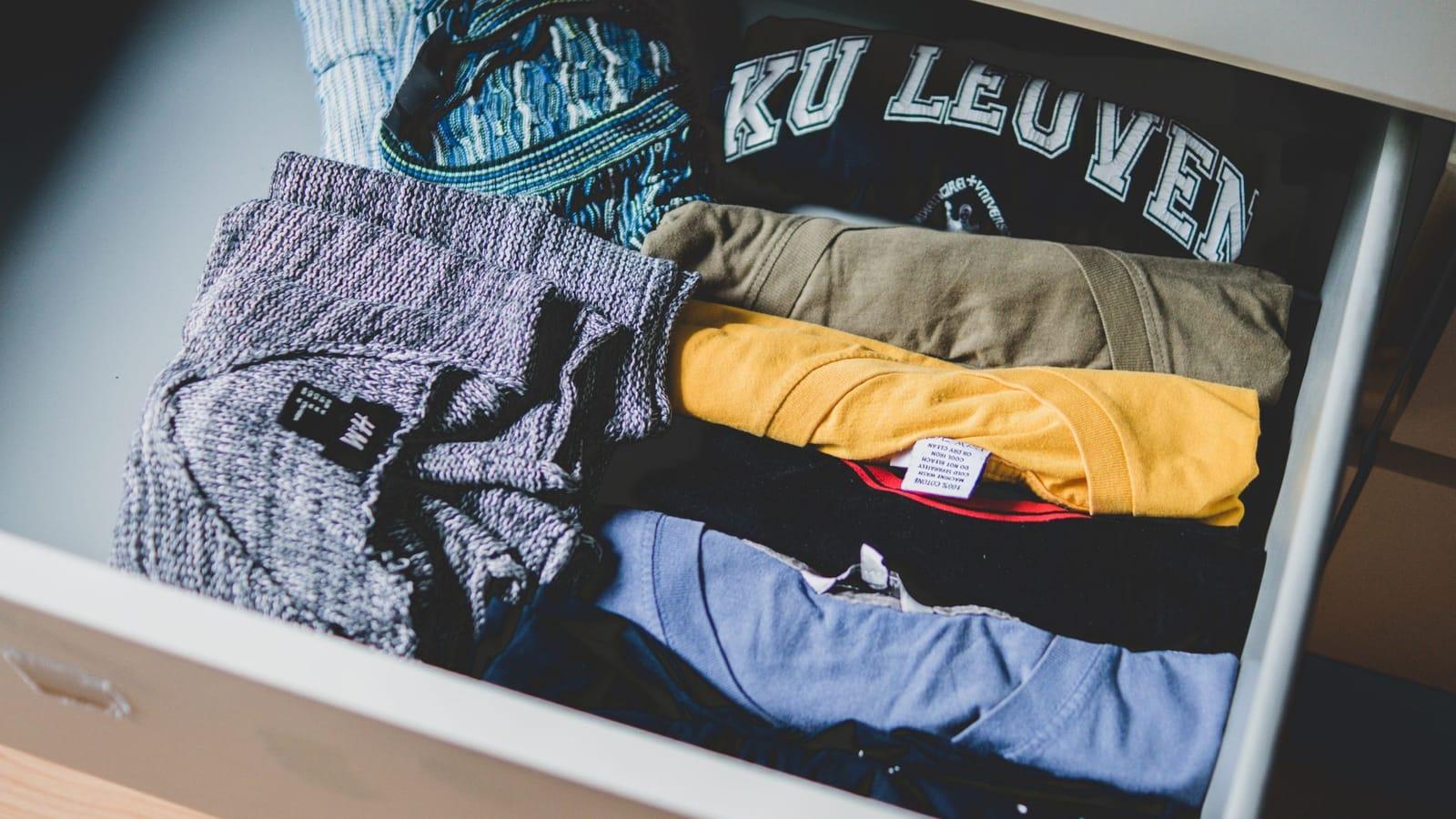
You look at the chest of drawers in the bedroom and do a simple sum. Six drawers full of T-shirts, socks and underwear, all folded and tidy. Emptying them means filling boxes, carrying them down, carrying them up and putting everything back where it was. Leaving them full means moving one piece of furniture. The temptation is strong, and it is fair: in some cases you really can do it.
The point is knowing which ones. The answer does not depend on the furniture in general, but on three things you can check yourself now, before you open the first drawer.
Three questions before you decide
Who carries it, and the route it takes. A full piece of furniture weighs what the wood weighs plus everything inside it. On a wide landing, with two people and a lift that reaches your floor, you feel the extra weight but you can manage it. On a flight of stairs the piece travels at an angle, and the weight slides towards whoever is below. If the building has no lift, read how to move house without a lift first: there, a full drawer is a problem for somebody's back.
How the drawer is made. Pull one out and look underneath. In many pieces the bottom is a thin panel slotted into a groove, meant to hold things that sit still with the drawer level. When the piece tilts, the contents press on the bottom and on the front, and the drawer is not made for that. If the bottom already bends under your hand, you have your answer.
What is inside. A drawer of socks and a drawer of cutlery do not react the same way to a jolt. This is the question that decides the most, and it has a section of its own.
What can stay, and what always comes out
Light, soft things that cannot break can stay: T-shirts, underwear, pyjamas, towels, sheets. On three conditions. The piece travels upright, not lying down in the van. The piece is solid, and the drawer bottoms do not give. And the drawers are held shut with masking tape, the kind that comes off without damaging the finish, or with a strap around the piece.
These always come out:
- Anything that breaks. Glasses, picture frames, perfume, the ornament you put there "just for a moment".
- Anything heavy. Books, tools, cutlery, a full first aid box. Weight packed into one drawer pushes on the bottom and on the runners.
- Liquids, even closed ones. A bottle that leaks into a drawer of sheets is something you will smell for weeks.
- Anything you cannot lose. Documents, keys, medicines you take every day, jewellery. They travel with you, as the article on what never to put in a box explains.
- The contents of furniture you take apart. If the chest of drawers has to come apart to get through the door, the question does not arise.
If a removal company is doing the move, ask in the quote whether they carry furniture with things inside. Get it in writing: you need to know beforehand, not on the day, standing at the door.
Emptying without losing the order
When a drawer has to be emptied, the real worry is not the effort. It is ending up in the new home with everything mixed together, and spending an evening rebuilding an order you already had.
The way to avoid it is to treat each drawer as one unit. One drawer, one space in the box, in the same order it was in: the T-shirts rolled in a row, the socks next to them, the underwear on top. Write a number on a strip of masking tape stuck to the drawer, and put the same number on a tag inside the box. In the new home you open it, find the number and empty it into the right drawer in a minute. How to fold clothes so they do not come out full of creases is covered in a separate article.
This is where the box matters too. A Cangubox holds 68 litres. To close it you lower both halves of the lid until they catch on each other, with no tape, and you lift it by the grips set into its short ends. In the new home you carry it next to the chest of drawers, open it, empty it and shut it again, with nothing to cut. It stacks even when full and shut: the boxes for one bedroom wait their turn in a single stack against the wall.
Even empty, drawers move
Once the piece is empty, there is one risk people forget. An empty drawer still slides, and when the piece tilts on the stairs it comes off its runners and falls. Hold them all shut with masking tape, or pull them out and carry them separately.
Taking them out has one advantage: the piece without its drawers weighs less than it does with them in, and you can grip it by the sides. Stack the drawers you have taken out one on top of another, with a blanket in between so the fronts do not get marked. Before you take them out, mark each one's position with a number on the tape: the drawers of one piece look the same, but one put back in another's place may not close flush.
Before you decide, walk round the home with a sheet of paper. For each piece of furniture, write down the drawers that stay full, the ones to empty, and the ones to empty because you are not taking those things at all. Count the drawers in the second column: that is where you start when you count the boxes. You choose your Cangubox kit here.