Leggi questa guida in italiano
Taking down ceiling lights and lamps before a move
Power off at the fuse box, loose wires capped, glass wrapped piece by piece: how to take a light fitting down from the ceiling and move lamps and shades.
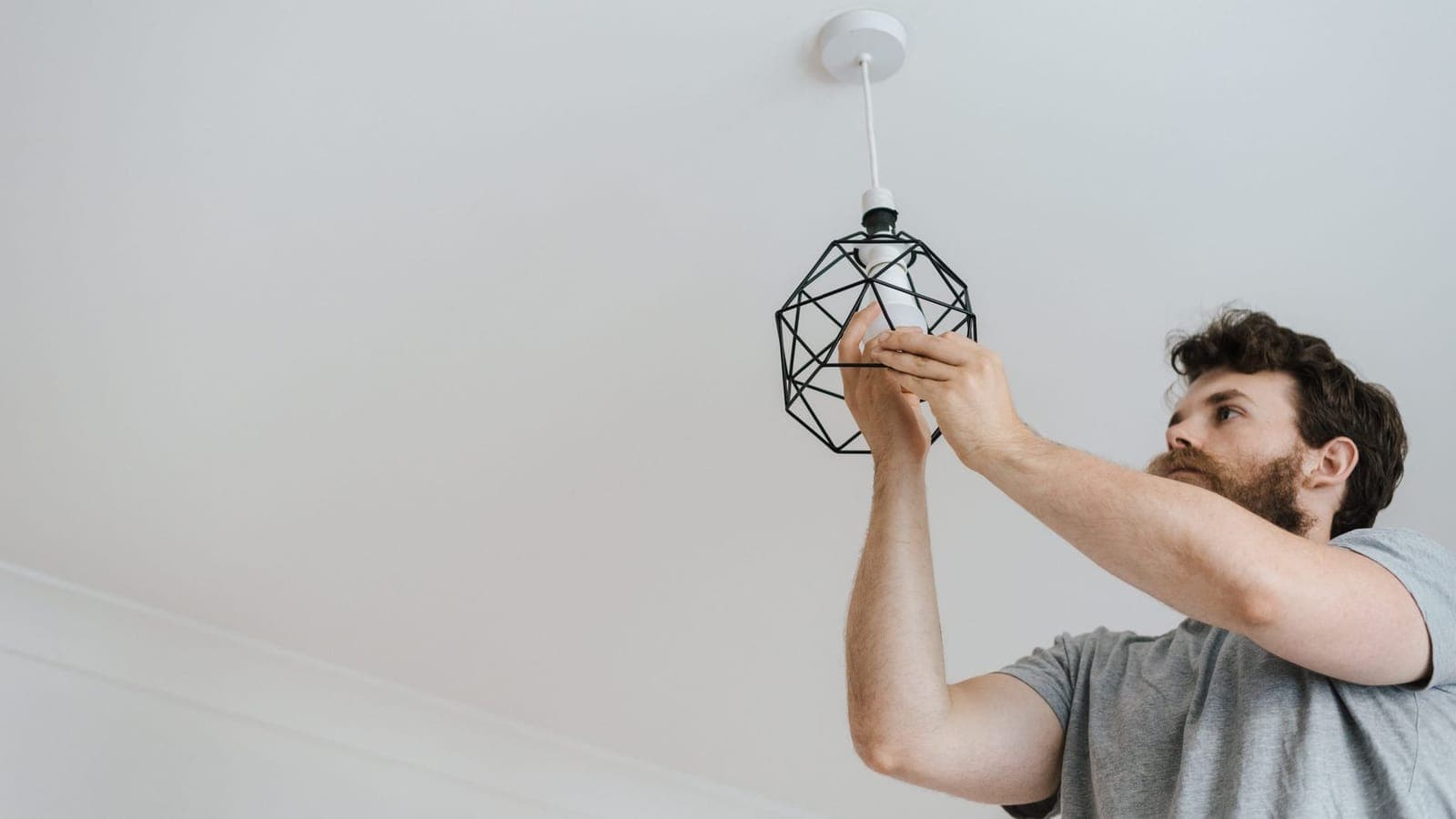
The ceiling light has hung there since the day you moved in, and nobody thinks about it until the night before the van comes. By then it is dark, the ladder is already in the cellar, and taking it down means working with your arms above your head on two wires when you have no idea how they are connected. Often it gets put off until the next morning, with the van outside and people waiting.
Taking it down is not hard, but it is one of the few jobs in a move where you put your hands on the electrical wiring. That is why it should be done a few days before, in daylight and without rushing.
Before you touch a wire
Turning off the wall switch is not enough. That switch may break only one of the two wires, and it may not be the one that carries the current. You cut the power at the fuse box: switch off the breaker for the lights, or the main switch if the breakers have no labels.
Then check. A voltage tester screwdriver, the kind with a small light in the handle, is sold in hardware shops: touched to the terminal, it should stay dark. If you have no tester, do not assume the power is off.
You also need a steady ladder, fully open, and a second person. A light fitting with glass shades is heavier than it looks from below, and whoever undoes the terminals needs someone to hold the weight.
If the wires coming out of the ceiling make no sense to you, or the fitting hangs from a hook you cannot see, call an electrician: it is their job, and with electricity you do not work by trial and error.
Down from the ceiling, in the right order
- Bulbs first. Unscrew them once the light is cold and put them aside. It takes off weight, and bulbs are the first thing to break if the fitting swings.
- Then glass and shades. Bowls, drops and diffusers come off now, one at a time, while the fitting is still fixed to its hook. Lay them on a cloth straight away, not on the floor.
- Photograph the connections. Before you undo anything, take a close-up photo of the terminal block: which wire goes where. In the new home that photo saves you guessing.
- Unscrew while the other person holds. Loosen the terminals, pull the wires out, and only then unhook the fitting.
- Cap the ceiling wires. Each wire left behind goes into its own connector, lever or screw type. Two bare wires hanging down are a danger to whoever moves in after you.
- Keep the screws together. Screws, ceiling rose and hook go into a closed bag, tied to the fitting or packed in the same box as the glass.
If the home is rented, check the inventory you signed when you moved in before you take anything down. If the light was already there when you arrived, it is not yours and it stays: how the handover works is explained in the article on handing back a rented flat.
Glass, shades and floor lamps
Glass parts are treated like drinking glasses: each one wrapped on its own, standing upright, with something soft around it and nothing heavy on top. You can follow the same steps given for packing dishes. Crystal drops are wrapped in small groups in a cloth, so they do not knock against each other.
For the glass, the risk is not inside the box. It is what happens to the box afterwards, in the van, when the rest of the load is put on top of it. The walls of a Cangubox are rigid polypropylene, and according to its spec sheet it can be stacked when closed with a full load inside: the one with the glass can sit in the stack with the rest, with no need to keep it aside on top of everything. You close it without tape, because the two halves of the lid are hinged and lock into each other: in the days before, you reopen it each time you take down a lamp. What the rental includes is described in the kit.
Fabric or paper shades get crushed easily. Measure them before you decide where they go, and if they are large, take them in the car with you, on the seat.
Floor lamps nearly always come apart in three pieces: base, pole and head. Coil the cable and hold it with a rubber band, separately rather than around the pole. The joining screws go in a bag taped to the base.
Bulbs you have taken out go back in their packaging, if you still have it, or are wrapped one by one in newspaper and stood upright.
The first evening in the new home
In the new home you may find nothing but two wires coming out of the ceiling. For the first evening, a table lamp with the bulb already screwed in is enough, in the box you open first: what else goes in it is in the article on the first day in your new home.
The ceiling light goes back up in the days that follow, not on the evening you arrive. Power off at the fuse box, the tester, the photo of the connections in front of you and someone to hold the weight. If there is no hook in the ceiling, or the wires look nothing like the ones in the photo, it is time for the electrician again.
So, a few days before the move: cut the power at the fuse box and check with the tester. Take out the bulbs and glass, photograph the wires and cap the ones left in the ceiling. Wrap the glass piece by piece and set aside one lamp for the first evening.