Leggi questa guida in italiano
Clothes moths and bed bugs: how not to bring them to your new home
Where to look before you pack, how to treat clothes and wool before you close them up, and how to move things so they arrive clean.
The day you move in, a new home is empty. There are no wardrobes, rugs or sofas, so there is nowhere for an insect to live. Then your things arrive, and with them everything that was living inside them.
Bed bugs in particular travel with your belongings. The US Environmental Protection Agency, the EPA, says bed bugs spread by travelling on furniture, bedding, luggage, boxes and clothing. A move puts all of these on the road at once, on the same day. It is also the only time every single thing you own passes through your hands, so make use of it.
Before you pack: where to look
Bed bugs live close to where people sleep. The EPA explains where to find them: along the piping, seams and tags of the mattress and bed base, and in cracks in the bed frame and headboard. In badly infested rooms they spread to the seams of chairs and sofas, between cushions and into the folds of curtains. The signs to look for are rusty or reddish stains on the sheets, dark spots that bleed into the fabric like a marker pen, and the tiny pale yellow skins they shed as they grow.
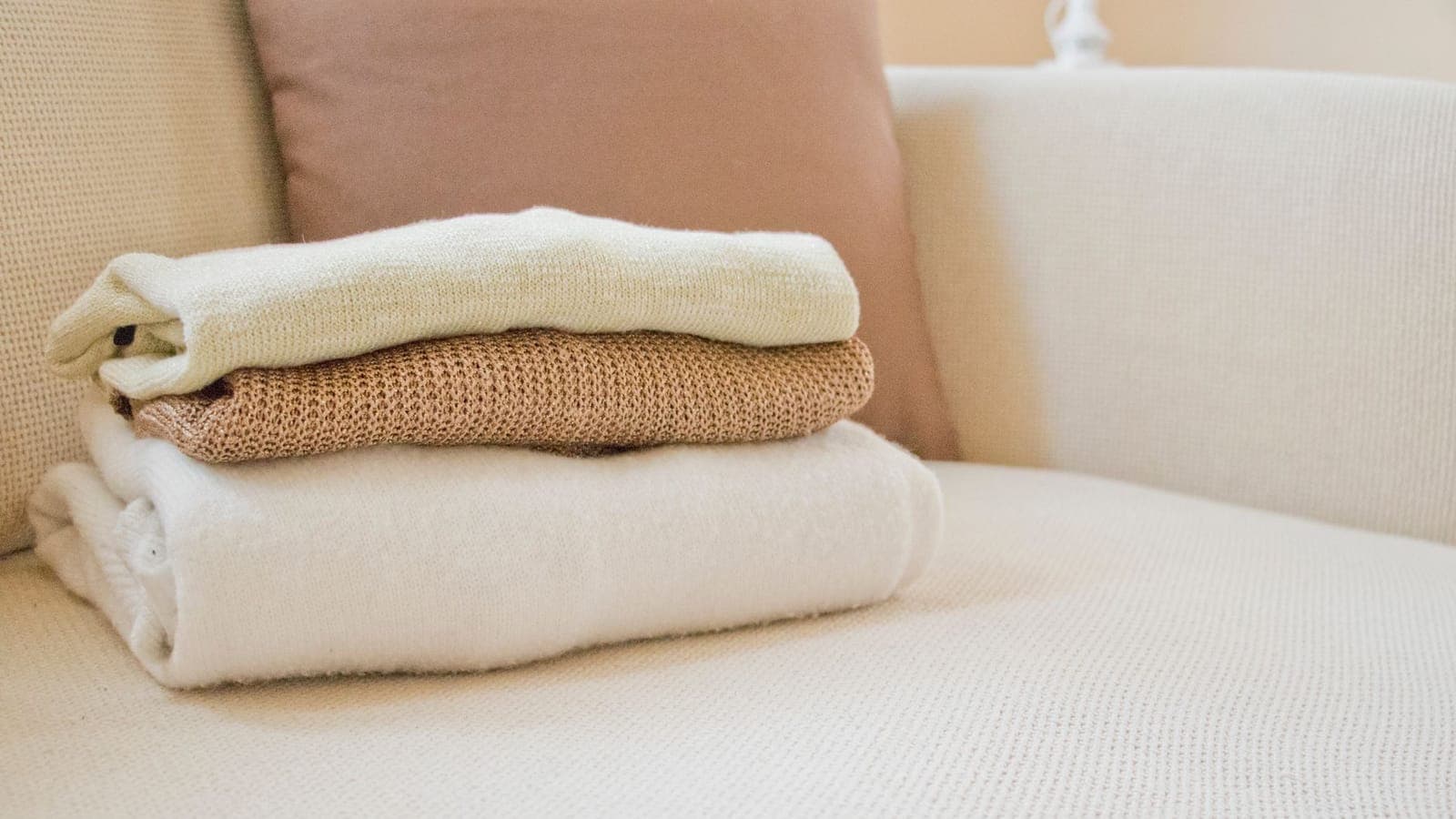
Clothes moths are after wool. According to the University of California fact sheet on clothes moths, they feed on woollen clothes, carpets and rugs, upholstered furniture and furs. They only go for synthetics and cotton blends if these also contain wool. The damage usually shows under collars and cuffs, in the crevices of upholstered furniture and on carpet under heavy furniture. And a garment stained with food or sweat attracts larvae more than a clean one does.
If you find signs of bed bugs, stop before you pack. An active infestation is a job for pest control, and the EPA is clear on one point: things from an infested room should not be moved into a clean one. A new home is a clean room.
Wash, heat, then seal straight away
Anything that can take heat is the easy part. For bed bugs the EPA recommends a household dryer on high heat for thirty minutes, and warns that washing alone may not be enough. For clothes moths the California fact sheet recommends washing for twenty to thirty minutes in water of at least 49 °C (120 °F in the source), or dry cleaning for woollens that hot water would ruin. Before you heat any fabric, read its care label.
The step people skip is the next one. The EPA advises taking items out of the dryer and putting them straight into a sealed bag, and folding them later. A jumper that was washed and then left on a chair for three days, next to the ones still waiting to be washed, is no longer a treated jumper.
For wool you are not washing, the storage rule applies: clean, checked and sealed. The same fact sheet points out that mothballs contain a toxic substance, should be kept away from children and pets, leave their smell behind and can damage plastic items. For folding clothes so they arrive in good order, there is the guide on how to pack clothes.
How the clean things travel
You have washed, heated and sealed. Now all of it goes into a box, and the box is often the one thing nobody has checked.
In its guide to preparing for treatment, the EPA says to get rid of cardboard boxes, because bed bugs can hide in cardboard, and to replace them with plastic boxes if you need somewhere to store things. Corrugated cardboard has channels between its layers, folded edges and tape over the joins, and you can see this by looking at one from the side. A box picked up from a supermarket or a cellar already has a history, and you do not know what it is: if that is how you are sourcing them, the pros and cons are in the guide on where to find boxes.
A Cangubox has walls of rigid polypropylene, and its lid is part of the crate: you close it by lowering its two flaps, without tape. When one comes back from a rental we check it and wash it, and it only goes out again if it comes back clean; if that cannot be done, it is taken out of use. You receive it clean, dry and ready to fill. What goes inside is what you have already washed or checked, and nothing you know is infested: that stays in its sealed bags until it has been treated.
In the new home, the first few days
Boxes of fabrics are opened first and emptied straight into the wardrobes, rather than sitting closed in the hallway for weeks.
For wool, the California fact sheet suggests hanging garments in the sun from time to time and brushing them, especially along the seams and inside the folds, where eggs and larvae sit.
The last way in is the one people forget. If a second-hand sofa, a bed bought used or an inherited chair comes into the new home, the EPA says to check it before you bring it inside, in the places listed above. An empty home only stays clean until something you have not looked at comes through the door, and there is a separate guide for the rest of the first evening.
In short: check the seams of the bed and the collars of your woollens before you pack, heat what can take heat and seal it straight away, move clean things in clean containers, and check every piece of used furniture on the doorstep.