Leggi questa guida in italiano
Changing your children's school after a move
Keep the old school or change it, in September or during the year: how the nulla osta works, what the new school decides and what is different in Milan.
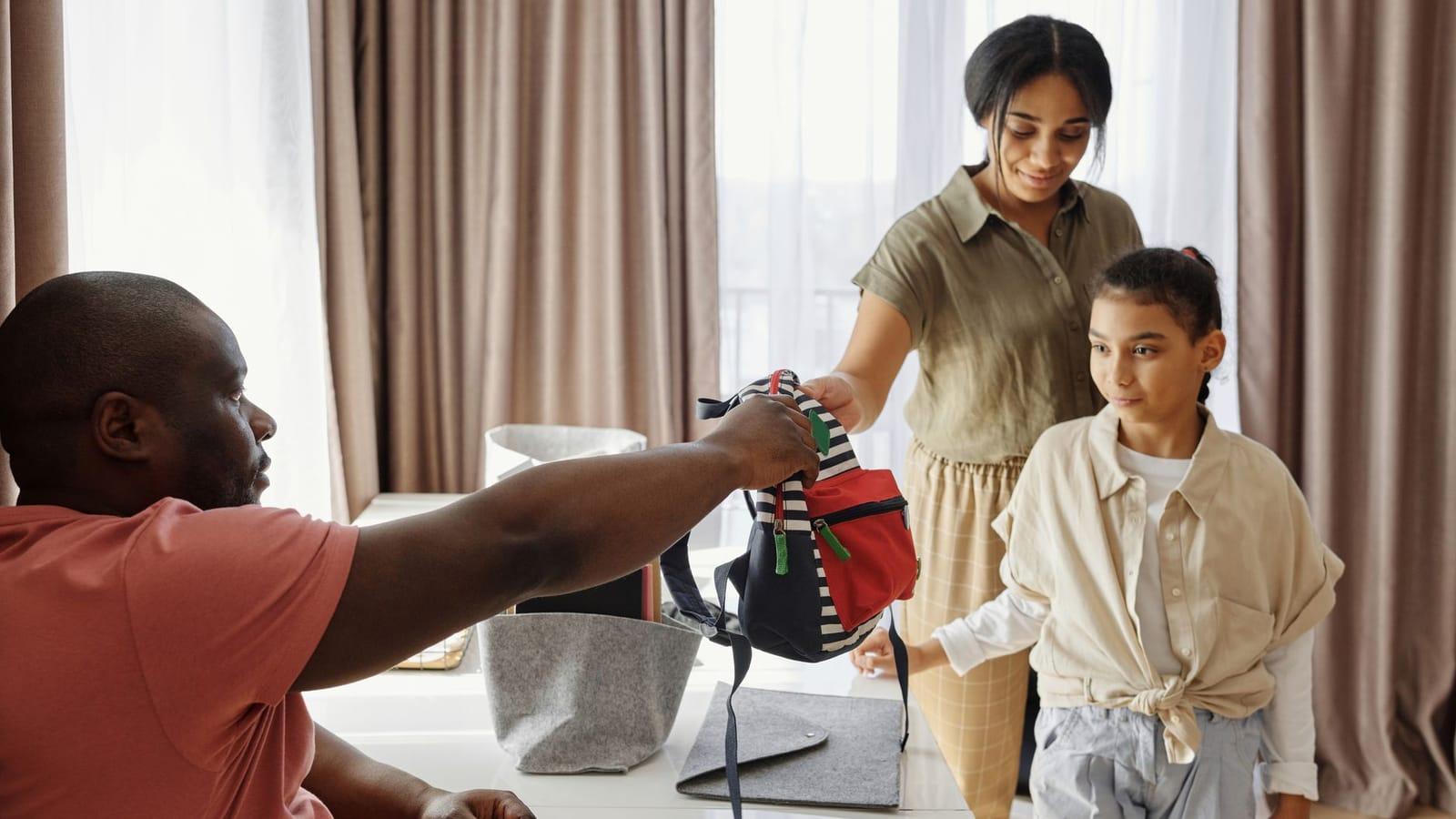
The new home is half an hour from the children's school, or in another town. You get the keys in January, and the school year ends in June. You wonder whether you can move them now, and who you have to ask.
The rules are in the Ministry of Education and Merit's note on enrolment for the 2026/2027 school year, dated 17 December 2025, and on the City of Milan's school pages. We read them on 16 November 2026. Outside Milan, the local part is on your town council's website.
First question: does it really have to change?
Not always. Moving house does not force you to change school: you choose the school, and where you live counts as a priority criterion, not a rule. Three questions help you decide.
- How long the journey takes, with the transport you will really use, at the time school starts. Half an hour in the car with a parent is one thing. Two bus changes for a seven-year-old is another.
- Who takes them and who picks them up. If no adult at home has working hours that fit the new journey, you already have your answer.
- Where they are in the school cycle. In the last year of primary or middle school, finishing with their classmates matters more than a long journey for a few months.
In Milan there is one more detail. The City's school bus is only for children who go to the school of their own catchment area, live more than two kilometres away and have no direct public transport. A child who stays at a school outside the catchment area of the new home does not get that service.
In September or during the year
Changing in September is simpler than in the middle of the year, because children start with everyone else, as the article on moving with children also explains. But you do not choose the date of the keys, and the Ministry's note also allows a transfer during the school year.
For the first cycle (primary and lower secondary school), a transfer works like this:
- The request gives a reason and goes to both head teachers, the one at the current school and the one at the new school.
- The new school accepts it if it has places. Each school board sets its own priority criteria, and the note asks boards to set them also for requests that arrive during the year because a family moves.
- Once the new school says yes, the old school sends the nulla osta (the release form) to you and to the new school.
- The new school updates the National Pupil Register. That is not your job.
On timing, the note talks about the "first months of the school year". But for a move between two schools of the same type, you can apply later too, for exceptional reasons documented in the request. The example the note gives is exactly a family's unexpected move to another city.
And what if the school you chose has no place? During the year too, the note asks the last school that receives the request to help the family find another one, and to make sure the enrolment goes through.
One last point, for every family. The Civil Code gives the choice of school to both parents, by mutual agreement, even when they are separated. On the enrolment form, the person filling it in declares that the choice was made this way.
In Milan: the catchment school
In Milan, primary schools are divided into catchment areas, and your catchment school depends on your address. To find out which one is yours from the new home, the City has a service called "Ricerca la tua scuola" (find your school). A child who chooses a school other than the catchment school is accepted if there are places, under the criteria each school publishes.
Three services to check again with the new home:
- Primary school books. Primary school children get them free from the town where they live. If you change town, ask the new one how it works.
- School meals. The school office explains how to apply for them.
- The school bus, with the same conditions as above: catchment school, more than two kilometres, no direct transport.
For questions about transfers, the City's page points to the Regional School Office, Milan area office, at Via Soderini 24.
The right order, from the keys to the first school day
The school paperwork starts before the move, because the nulla osta waits for the new school's yes, and that yes waits for a free place. So:
- Ask about places as soon as you know the key date. Call the office of the school you want, explain that you are moving and when, and ask if there is a place and which criteria they use.
- Send the request with its reason to both schools, and write the date of the move in it. The reason is the move, which is the case the note names.
- Do the change of residence as soon as you move in. It counts for the catchment area, the books and the school bus, and the other notices on the list of people to tell about a new address also start from that address.
- Talk to the teachers at both schools. The paperwork moves between school offices, but it is people who know how your child is doing.
The school bag, the exercise books in use and the homework diary do not go in any box. They stay with you, together with your documents, because on the Monday after the move there is school as usual. Which school is decided by the four steps above: doing them early is how you find out before that Monday.