Leggi questa guida in italiano
Moving with pets: how to manage cats and dogs
What weighs on the cat is the new place, while the dog mostly picks up on your stress. How to prepare in the days before, the journey and the arrival.
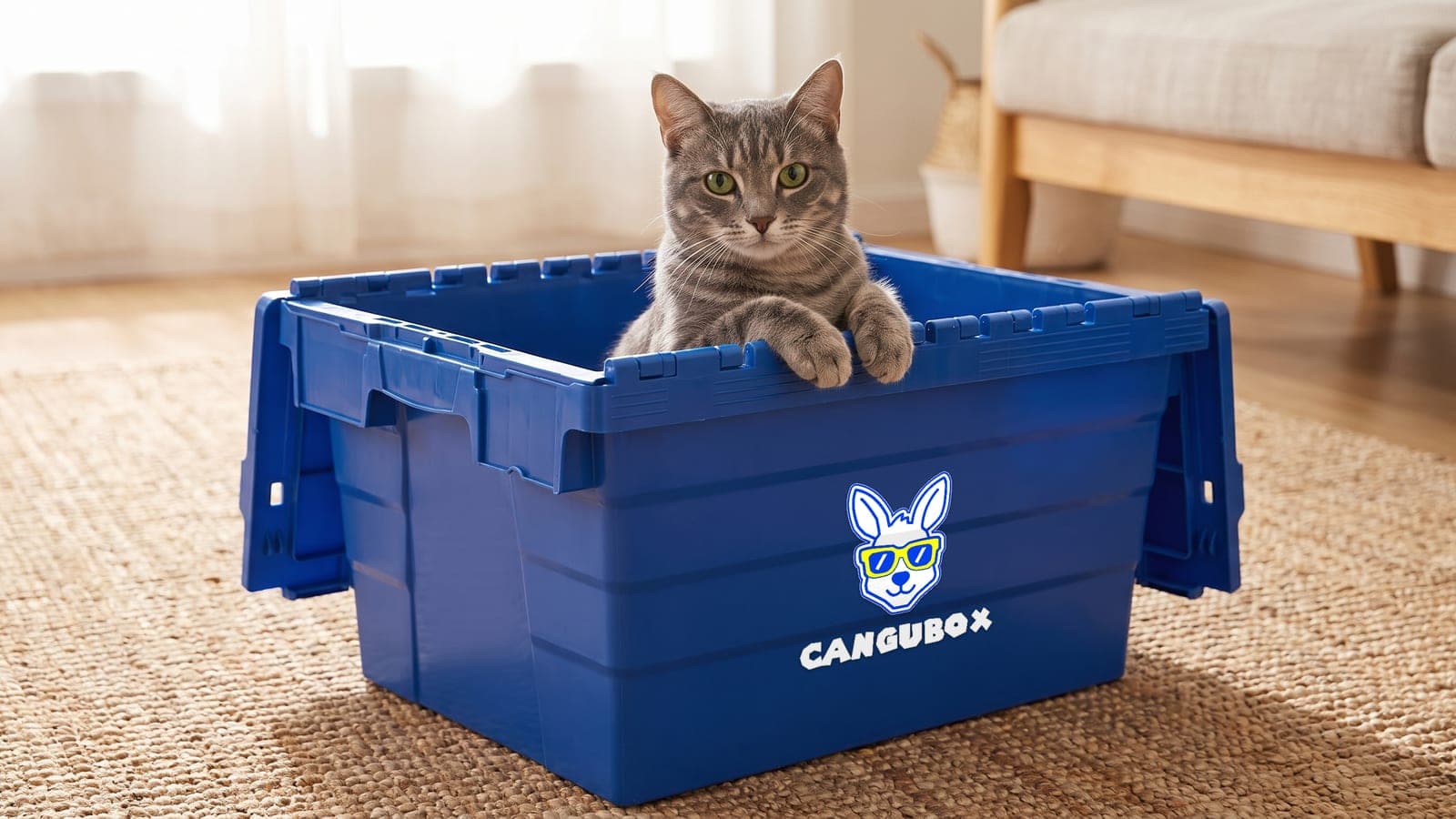
For an animal, the move begins well before the day the van arrives: weeks earlier, when the furniture starts to disappear and the home stops having the shape and smell it always had. Cats and dogs notice long before you do. What you see on the difficult days, the cat that will not eat or the dog that is forever under your feet, almost always started back then.
The useful thing to know is that most of the stress can be prevented, and it costs little: a few weeks of lead time and some attention to how you organise the final hours.
Cats and dogs have two different problems
The cat is attached to the place. Its territory is made of scents left on the corners of the furniture, of fixed routes, of high spots from which to keep an eye on the room. When you change home you take all of it away at once, in a single day, and the problem it faces is one of geography.
The dog, on the other hand, is attached to you and not to the house. The new one disorients it far less than seeing you agitated, hearing unknown voices in the corridor and no longer understanding what time you go out. That is good news, because your own behaviour is something you can work on.
Almost everything else follows from this difference. With the cat you work on space: you leave it one stable place while everything around it changes, and in the new home you give it back one piece at a time. With the dog what counts instead is time: you keep the schedule fixed, walks at the same hour, the bowl at the same moment, even in the week when you no longer know where you put your own shoes.
The weeks before
The carrier comes out of the cupboard. If the carrier only appears for trips to the vet, your animal has learnt very well what it means to see it. Get it out two or three weeks early, take the door off, put in a blanket that smells of home and leave it open in a corner the animal uses. It will go and sleep in it on its own, and when the day comes it does not feel like a trap, because by then it is a place the animal knows.
Get the cat used to the room you will use. Choose the room you will close off on moving day and make it a normal place well beforehand: bowls, litter tray, scratching post, a couple of play sessions a day. If the first day the cat goes into that room is also the day the door closes and there is the sound of a drill outside, you have added two unpleasant things together instead of keeping them apart.
Pack gradually. A home that empties in twenty-four hours is an event, while one that takes three weeks is a change, and animals absorb changes better. If you can, leave until last the furniture the cat sleeps on and the armchair the dog leans against.
Set aside the animals' box. Dry food, bowls, lead, medicines, bags, litter, toys, a couple of used blankets. It is the box you close last and open first, so load it where you can reach it without unloading half the van. A rigid box helps, because you can open and close it again without ruining it: the Cangubox measure 60 × 40 × 36 cm, and in that volume there is room for everything a medium-sized dog needs for a week.
The vet and the paperwork
If you are changing area, the change of address has to be reported to the regional pet registry (the anagrafe degli animali d'affezione), the one where the microchip is recorded. It sounds like a bureaucratic formality, and it is, until the animal gets lost: if the chip points to an address where you no longer live, whoever finds it takes much longer to get back to you. In several regions registration is compulsory for cats too: if you are not sure where you stand, ask your vet, who has access to the registry and can check in two minutes.
Take the opportunity to get a copy of the medical records, check when the vaccinations are due and ask whether anything is needed for the journey. If your animal has known episodes of anxiety, this is the time to talk about it, not the night before. Pheromone diffusers and calming aids exist, but they should be chosen by someone who knows the animal, and they are usually started days in advance to be effective.
Look for the new vet before you need one, too. Already knowing where to go and what time they open counts for a lot on the evening when the cat has not eaten for two days.
Moving day
What counts most that day is that the animal is not in the middle of it, and not out of organisational fussiness: in a home with the front door wide open for hours, with strangers coming and going and heavy objects on the move, the chance of someone slipping out of the door without anyone noticing becomes high.
There are two options. The first is to take the animal somewhere else for the day: to a friend, a relative, a boarding kennel or cattery. It is the best solution for dogs, which are perfectly happy anywhere as long as they are with someone they know. The second is the closed room: the last one to be emptied, with a big sign on the door, a water bowl, the litter tray, the usual blanket. This is the one for cats above all, which would suffer twice instead of once if moved to someone else's home.
If you choose the room, tell the people helping you before they start work and repeat it during the day, because a "the cat is in there, that door stays shut" said only at eight in the morning is forgotten by everyone within a few hours.
The journey
In the car the animal travels contained. The Italian highway code requires that it does not get in the way of driving, and with more than one animal you need a cage or a divider net. Beyond the rule, a loose dog thrown forward under braking is a danger to itself and to the driver.
The carrier should be secured, not just placed: seat belt threaded through the handle, or wedged against the base of the seat so it cannot slide forward. Cover it with a light cloth if the animal is agitated, leaving air: reducing visual stimulation calms almost all cats.
Do not give a big meal before setting off. Two or three hours without food greatly reduce the risk of vomiting, while water should stay available until shortly before. In summer the critical point is temperature: never leave the animal in a parked car, not even for five minutes, not even in the shade with the windows cracked open.
On short trips, and in Milan that is almost always the case, the journey is the easy part, and what needs attention is the arrival.
Arrival: one room at a time
With the cat, you do not open the carrier in the living room. You prepare a single room first, with litter tray, water, food, its blanket and a few hiding places low down, you carry the carrier there, open the door and leave. Walking away is the hard part, because the temptation to stay and watch how it reacts is strong, but the presence of someone watching slows exploration down.
Then you widen the area. A day or two in that room, the door opened onto a second room, and so on until it has seen the whole home. It usually takes from three days to a couple of weeks. There is no advantage in speeding it up: a cat that gets frightened in a home it does not know looks for the deepest hiding place it can find, and the hiding places of a new home are also your blind spots, behind the appliances or inside a false ceiling.
With the dog you do the opposite. Bring it in on the lead, walk it calmly round every room, then put its bed in one place and leave it there. Before letting it loose in the garden or courtyard, check the fence centimetre by centimetre: newly arrived dogs test the boundaries, and a gap the previous dog never noticed gets found on the first afternoon.
The first weeks
Do not wash the bed, the blanket or the toys. I know the move is the perfect excuse to do it, and they are dirty. But they are the only things in the new home that still smell right, and for an animal that smell is information, so wash them in a month and not now.
For the same reason, put off the shopping. The new bed, the litter tray of a different design, the change of food you had in mind: they are all sensible things, to be done separately and not in the same week in which everything else has changed. A change of diet in particular should be gradual, and not while the digestive system is already working under stress.
Keep the schedule. Waking up, meals, walks: if it was seven in the morning and seven in the evening, it stays seven and seven even among the boxes still to be opened. For a dog, routine is the signal that the situation is under control, and it is the most reassuring message you can send without saying a word.
The cat should be kept indoors for at least two or three weeks, if it used to go out. A cat let out too soon goes back looking for the old home, and there are stories of cats found kilometres away, heading in the right direction. When you do let it out, do it before a meal and with the door open behind it, so it has a reason to come back in.
Signs to watch for
A bit of disorientation is normal and passes. Some things, though, deserve a phone call to the vet: a cat that has not eaten for more than twenty-four hours, an animal that is not drinking, one that goes outside the litter tray or in the house for days, one that keeps licking the same spot until the fur comes away, a dog that barks or gets distressed every time you go out.
These are behaviours that come from stress and often sort themselves out, but some also have medical causes, and telling the two apart by eye is not possible, so when in doubt it is better to call.
The other animals in the home
Rabbits, hamsters and ferrets suffer above all from noise and vibration: they travel in their carrier, covered, away from the speakers, and in the new home the cage is set up again exactly as it was, same layout and same accessories.
Birds are very frightened by movement. Cage covered during the journey, and never on a seat exposed to the sun.
Fish are the most delicate case: they are transported in bags or closed containers with their own water, the aquarium is emptied as late as possible and set up again as soon as possible, and the filter has to be kept damp because it is home to the colony of bacteria that holds the whole balance of the tank together. If the aquarium is large and the trip is long, it is worth talking to a specialist shop before improvising.
One thing that applies to all of them
On the day you unpack, start with their things. Bowls in their place, bed set up, litter tray placed where it will stay: twenty minutes of work that do not feel urgent and yet shorten the two weeks that follow. The rest of the boxes can wait, because you will sleep just as well in the middle of the mess and they will not.
And choose the positions with care, because moving them later costs more than getting them right first time. The litter tray in a quiet spot, not next to the washing machine that starts up mid-afternoon. The bowls well away from the litter tray, which is something cats are inflexible about. The dog's bed somewhere it can see the room where you are, not at the end of a corridor.