Leggi questa guida in italiano
Guitar, keyboard and other instruments in a move: how to get them there safely
Knocks, heat, cold and stairs: what harms an instrument in a move, what to carry yourself and where to put cables, pedals and music stands.
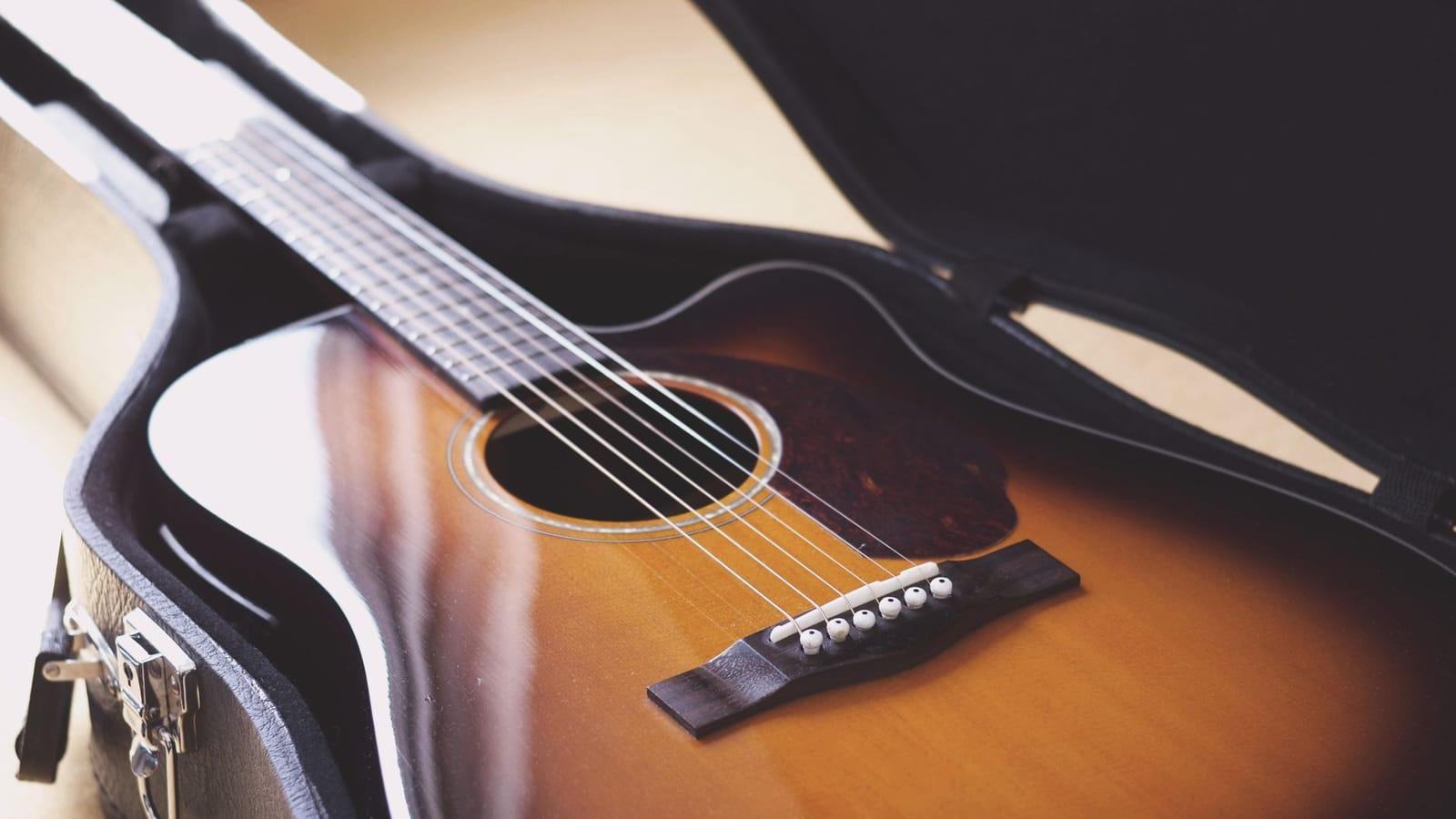
You have had a guitar leaning against the wall for years and never given it a thought. Then moving day comes and you wonder where to put it: in the van, in among everything else? In the car, on the front seat? And the keyboard, which is light but long and has its keys exposed?
Instruments are not usually heavy. They are fragile in specific places, and knowing those places in advance saves you finding them out when you arrive.
What harms an instrument
There are four things, and none of them is a mystery.
- Knocks. On a guitar the delicate part is the neck, long and thin: if the case falls or ends up under something heavy, that is usually where the damage is. A keyboard, by contrast, has keys, knobs and sockets on the side people tend to leave uncovered.
- Heat. A closed space in the sun warms up fast, and wood, glue and plastic do not cope well with it. How hot a parked van gets depends on the time of day and the season, but anyone who has opened a car in August has a fair idea.
- Cold. The temperature itself matters less than a sudden change: an instrument that goes straight from a freezing van into a heated room changes temperature and humidity all at once.
- The walk by hand. Between the front door and the room, the case bumps into door frames, steps and the corners of hallways. It is the shortest stretch, and it is easy to underestimate.
If your move falls in an extreme season, you will find the wider picture in moving house in hot weather and moving house in winter.
The instrument travels with you
The simplest rule is also the one that holds up best: the instrument does not go in the load. It travels with you, inside the car, in its case or flight case.
For a guitar, both the shell and the inside matter. A hard case absorbs knocks, a soft gig bag much less so. In either one, if the instrument can move inside the compartment, it hits the sides at every bend. Fill the gaps with a cloth or a jumper, without pressing on the neck. If all you have is a soft bag, put it on a seat, lying down or standing up but held in place, and never underneath other things.
A keyboard or digital piano needs its own bag, or its original packaging if you kept it. If you do not have either, a padded blanket with a rigid board underneath at least gives it even support. Unplug the cables and keep the power supply separate, but close by: in the evening it is the first thing you look for.
Violins, flutes, ukuleles and other small instruments nearly always have their own case, and they are fine in the car or in your hand. The same applies: nothing should move inside.
An acoustic piano, upright or grand, is another matter, and doing it yourself is not an option there. You need people who move pianos for a living, and you speak to them before fixing anything else about the day.
Everything else, in a separate crate
Around the instrument there is a whole world of small things, and that is what gets lost: cables, pedals, power supplies, picks, straps, a music stand, sheet music, a tuner, spare strings. They do not break, they scatter. Put in a bag, they end up under the clothes and turn up three days later at the bottom of another box.
These pieces need a container that stays shut and opens again quickly. A Cangubox measures 60 × 40 × 36 cm, has a load capacity of 30 kg as stated by the supplier, and is rigid: put the pedals and power supplies at the bottom, and the coiled cables and the sheet music in a folder on top, so it does not get bent. The lid closes without tape: in the evening, to find the right cable, you open it again without cutting anything. The guitar in its case will not fit, though, and for that the advice above applies.
Use a single crate for the music things, and inside, on top, put a sheet listing what it holds. Each power supply goes with the thing it powers, not spread across three different boxes: the pedal with its own, the keyboard with its own. The same method works for the cables of your computer and other devices, and you will find it explained in how to pack a computer, cables and accessories.
When you arrive
As soon as you get into your new home, leave the instrument shut in its case for a few hours, in a room that is already at normal indoor temperature. That way the change of air happens slowly, inside the case, rather than hitting the wood in one go. Then open it, check that the bridge and the neck are as you left them, and only then tune it.
Choose its spot straight away: away from radiators, windows and outside walls, and not along the route where crates and furniture go back and forth in the first few days.
For other fragile things that are not instruments, how to protect paintings and mirrors follows the same logic: whatever can break travels with you or in a space you control. If you have decided instead to leave the transport to a removal company, tell them before the day that you have an instrument, and ask where they will put it in the van.
The evening before, decide three things: where the case goes in the car, which crate holds the cables, and which room in the new home it goes into first.