Leggi questa guida in italiano
How to protect a new floor on moving day
A newly laid floor gets ruined in a single day, and rarely by an impact: where to put the protection down and what to watch while everything comes in.
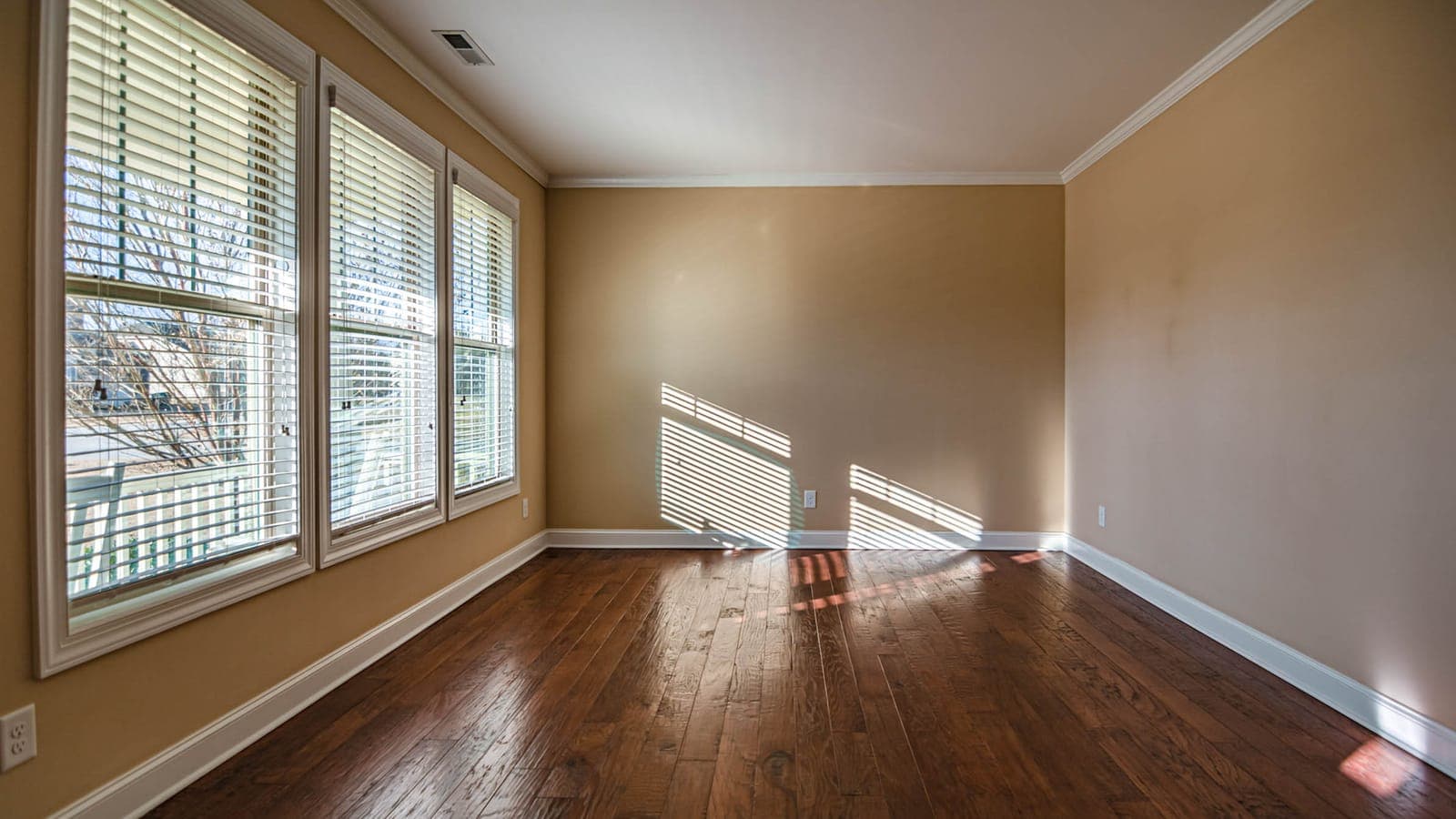
You have had the keys for a week, the parquet was laid recently or the floor was polished on purpose before you moved in, and in three days a sofa, a washing machine, dozens of boxes and four people wearing the shoes they have had on since this morning will all come through those rooms. It is the one day a new floor is at more risk than in all the years that follow, and it is over in a few hours.
The damage comes from grit, not from impacts
Chippings from the pavement, sand from the courtyard and dust from the building work next door all come in under people's soles. Every grain is a stone, and it travels under the weight of a person, back and forth along the same line all day. Wood, resin, vinyl and laminate get marked like this: not with a gouge, but with a film of fine scratches that only shows up when the light from the window comes in low. On porcelain tiles the weak point moves to the grout lines and to the tile edges by the door.
That gives you the rule the rest hangs on: the damage to fear is the one that repeats, not the one that happens once. A single bad knock you can repair. The same metre of corridor walked over from morning to night you cannot.
So the first piece of protection does not go on the floor, it goes at the door. A rough mat outside, an old towel inside, and you say it out loud to everyone who comes in: wipe your feet on both. It takes off the worst of the grit before it gets in.
Protect the route, not the room
Nobody covers a whole house and there is no need, because things do not spread out at random. They follow one line: the entrance downstairs, the hall, the corridor, and the two or three rooms where everything is unloaded. That is where the protection goes, and it goes wide, because someone carrying a weight in front of them cannot see where their feet land.
Three points along that line wear more than the rest, and you can pick them out before you start.
- Thresholds and the trims between one room and the next. They stand a few millimetres proud and they take the knock from every wheel that crosses them.
- The corner where you turn. A long piece of furniture in a narrow corridor gets pivoted on one edge, and at that moment the whole weight sits on a few square centimetres.
- The spot where things get put down for a better grip. There is always one, usually halfway along, and you find it on the third trip. Put something there on the first.
What to lay down, in order of how well it holds up: thin rigid boards on the main route, old blankets or a decorator's dust sheet in the rooms, flattened cardboard where there is less traffic. Cardboard does its job as long as it stays put: it slides under a sole, it curls at the corners, and if someone walks in with rain on them it goes soggy underfoot, right where somebody is pushing a weight along.
One thing not to do: no tape in contact with a finished floor. Packing tape holds the sheets to each other and that is as far as it goes, because on wood or vinyl it lifts the finish when you pull it off, and it pulls harder if it has been down for days. If the route takes in stairs as well, the plan changes, and it is in moving house in a building with no lift.
Wheels, corners and places to set things down
A wheel does more damage than a shoe for one reason: it puts the same weight on a much smaller area, so a grain of grit that ends up underneath gets crushed instead of trodden on. That goes for the delivery driver's trolley and it goes for our Dolly too, which is a platform on four swivel castors: wheels are wheels, and the floor under them has to be kept clean all day.
What you can still change on the day is the number of trips, and that is where the way the load is put together counts. The Dolly comes with every rental, and the boxes stack on it: you push one whole column instead of making a trip on foot for every box. Cangubox come in a single size, 60 × 40 × 36 cm, their lid is built in, two hinged flaps you fold down instead of taping, and the declared capacity is 30 kg per box: the column is rebuilt the same way every trip and holds itself upright across the corridor. The kits available are listed on the home page.
Furniture, though, never gets dragged. Two people lift it. If a piece is too heavy to lift, a felt pad goes under each foot, so there is always something soft between the furniture and the floor. Those pads go on while the piece is still empty: a full wardrobe will not be lifted again, so it is a decision to make while you are putting it back together.
There are three moments to this. The day before, you lay the sheets along the route, put the mat down, leave the broom in the corridor and photograph the floor with the light coming in low, which is the only light that shows what it really looked like: if you are renting, those photos are worth having when you hand the flat back. On the day, you keep it clean, you drag nothing and you sweep once halfway through. The day after, you vacuum before you wash, because a wet cloth run over the grit that is left finishes off by hand the job the soles started.