Leggi questa guida in italiano
Your building's rules and your move: lift, hours, building manager
A move goes through the entrance hall, stairs and lift, which are shared spaces. Where to find the building rules, what to look for, what to ask.
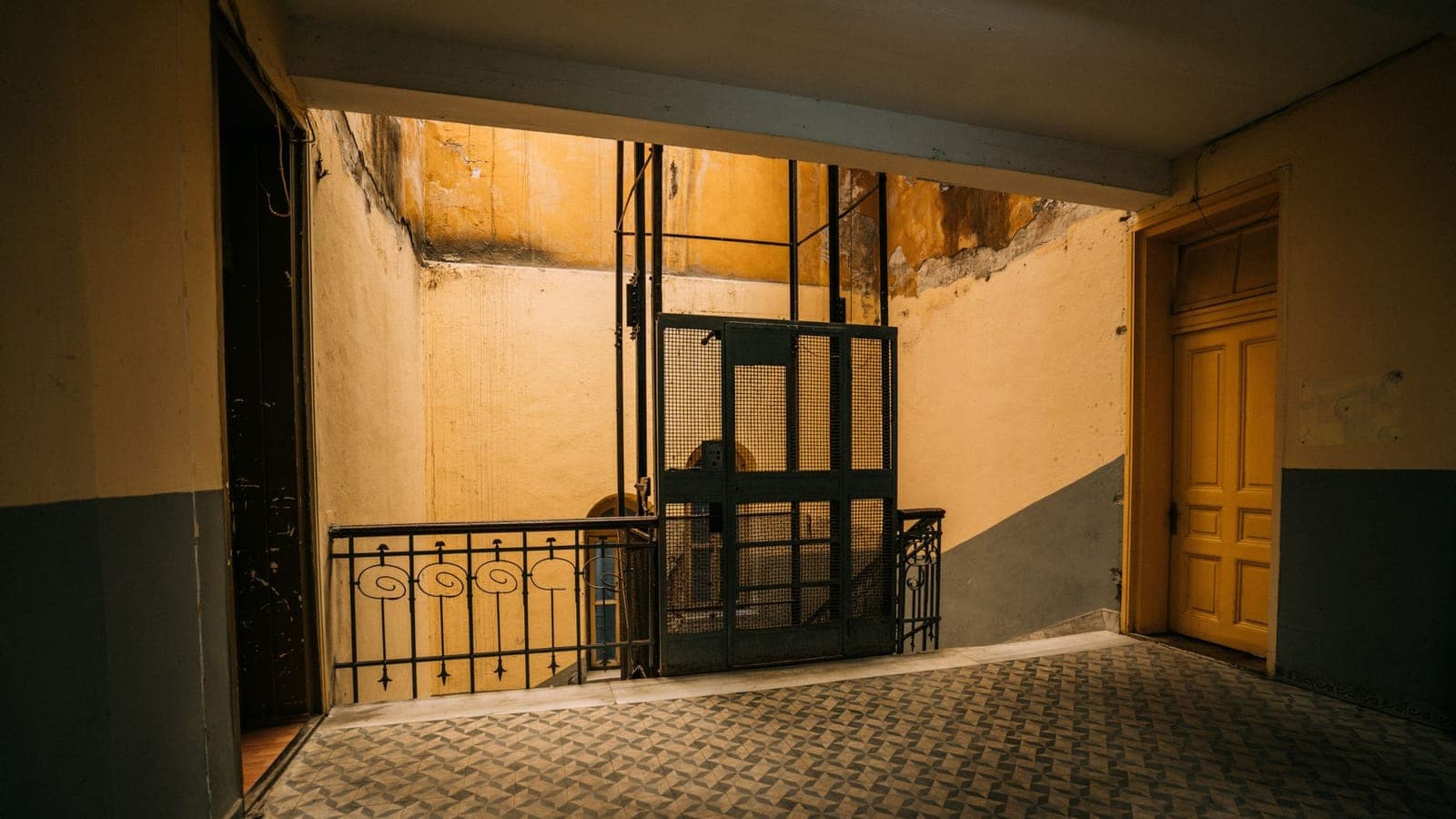
On moving day, half the work does not happen in your flat. It happens in the entrance hall, on the stairs, in the lift and in the courtyard: the shared parts of the building. You do not set the rules there, and you usually find them out at the wrong moment. A neighbour stops you on the landing while your hands are full, or the porter tells you the lift cannot be used that morning.
Most of those rules are written down, and you can read them in advance. It takes one document, one email and one sheet of paper on the notice board, and you do it twice: for the building you are leaving and for the one you are moving into.
Where the rules are kept and who gives them to you
In Italy, article 1138 of the Civil Code says that when a building has more than ten owners, it must have a set of building rules (the regolamento di condominio), and those rules must cover how the shared parts are used. The entrance hall, the stairs and the lift are shared parts: if the building has decided anything about moves, it is written there.
The rules are attached to the register of the owners' meeting minutes, which the building manager (the amministratore) keeps. Article 1129 says that anyone with an interest can ask to see that register free of charge and get a copy by paying the cost. The same article requires the manager's name and contact details to be displayed at the building entrance or in the most used shared area: look next to the doorbells or on the notice board.
If you rent, ask your landlord first: the landlord is the owner. If the building has ten owners or fewer, there may be no rules at all. In that case you put the questions below to the manager, if there is one, or to the neighbours.
You do not need to read the whole thing. Look for five words: ascensore (lift), parti comuni (shared parts), orari (hours), cortile (courtyard), trasloco (move). Read every page that contains one of them from start to finish.
The lift: questions to ask in writing
Every building handles its lift in its own way, and some of the rules are not written anywhere. So the questions go to the manager by email, and you keep the reply:
- Does it need booking, and how many days ahead?
- Does the lift car need protecting, and with what: blankets, panels, sheets?
- Can you hold the car at your floor while you load, and for how long?
- Is there a goods lift or a service entrance to use instead?
- Who do you tell if something breaks or gets scratched?
Then there is one thing you ask nobody, because you can read it yourself: the plate inside the car, with the maximum load and the number of people. That limit covers you and the boxes together. And take a tape measure: the width of the door, and the width and depth of the car. A Cangubox measures 60 × 40 × 36 cm, and with those three measurements you know how many fit on the floor on each trip. With the Dolly, the wheeled trolley included in the rental, you push the whole stack into the car at once, instead of loading one box at a time. If there is no lift at all, the day takes a different shape: there is an article on moving in a building with no lift.
Hours, entrance hall and courtyard
Hours are the second thing to look for. If the rules set quiet hours, loading and unloading go outside them, and so does the drill for taking furniture apart. If they set none, ask the manager whether the building has habits you should respect: it is one more line in the same email, and it saves you an argument on the stairs.
The entrance hall is where the boxes wait for the van. Here the rule to look for is the one on using the shared parts: whether you can leave things there, and for how long. Whatever it says, the front door, the stairs and the lift door stay clear for people coming in and out. A Cangubox can be stacked closed and loaded, and its lid shuts without tape: in the hall a stack takes up the floor space of a single box, and when the van arrives it leaves in one go on the Dolly.
The courtyard raises the same question with a van inside it: can you drive in, where do you stop, and until what time. If the van stays on the street instead, the permit comes from the council, not from the building, and the timing is explained in the article on the permit to park the van.
Before the day: the email, the notice and the photos
A move can leave marks on the stairwell walls and on the corners of the lift car. When someone later asks who did it, what counts is what you can show. On the morning, before the first box, take photos of the entrance hall, the stairs up to your floor and the inside of the lift car. At the end of the day, take the same photos again. A mark that was already there shows up in the first set. If you made one, you spot it straight away and tell the manager before a neighbour does.
For the neighbours, one sheet on the notice board or the front door is enough, put up a few days before: the date, the time slot, your floor and a phone number. People who know the lift will be busy on Thursday morning plan around it, and anyone with a problem calls you instead of waiting at your door.
So, for both buildings: this week, the rules and the five words, then a single email with all the questions, and you keep the reply. A few days before, the sheet on the notice board. On moving morning, before anything else, the photos.