Leggi questa guida in italiano
Plants and moving house: how to move them without killing them
Plants are the one thing in your home that can die from the way you move it. What to do in the two weeks before, how they should travel, and the first days after.
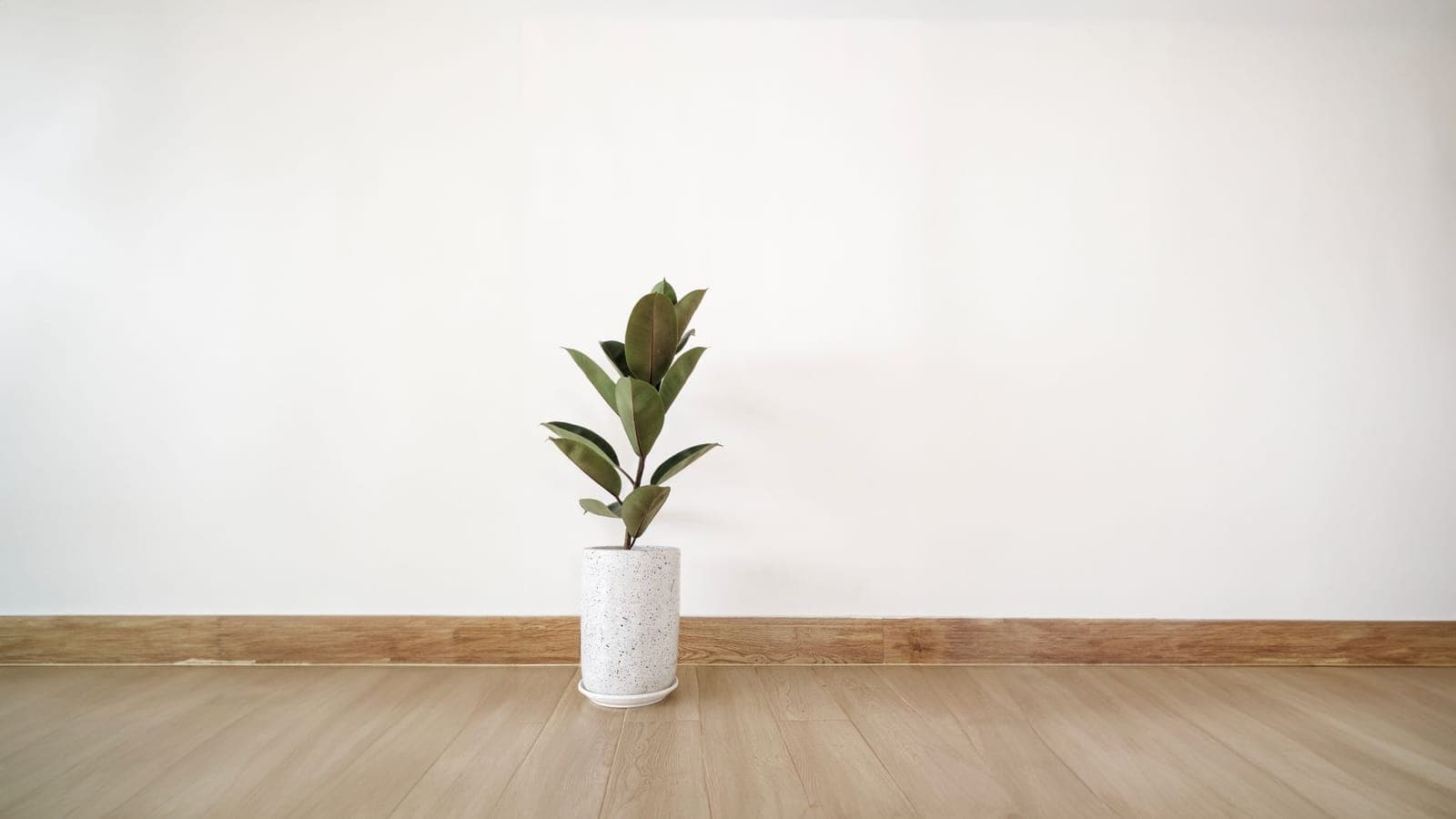
Plants are the one thing in your home that can die from the way you move it. A glass either breaks or it does not, and you know straight away. A monstera arrives in one piece, you put it down in a corner, and three weeks later it is losing a leaf a week and you cannot say when that started.
They are also the thing nobody puts on a list. On moving day they are left until last, because they do not stack and they do not fit inside anything, and they end up wherever there is room: upright on a seat, lying among everything else with soil spilling out, inside a shopping bag.
What hurts them is not the journey
Forty minutes on the road kills nothing. The damage comes from the three days around it, and there are three reasons, always the same ones.
The light changes all at once. A plant has got used to the window it had: that direction, that distance, those hours. In the new home the window is a different one, and getting used to a new one takes weeks. Leaves dropping after a move are almost always about this, not about the journey.
The swing in temperature. The worst part is not the road, it is what comes before and after: the landing, the pavement, the boot standing in the sun while you finish loading. In summer half an hour inside a closed car cooks the leaves. In winter a few minutes left outside, on a balcony or a cold landing, burn the tips. If you are moving in the warm months, the rules for the heat apply to your plants before they apply to you.
The roots get shaken. The pot tips over, the rootball comes away from the sides of the pot, the soil packs down on one side. The plant does not show it straight away: it shows it later, when it stops drinking and you carry on watering at the same rate.
The two weeks before
Almost all the work happens here, five minutes at a time.
Do not repot now. Repotting is one shock and moving is another, and one at a time is enough. If a pot has become too small, you change it a month before or a month after, never in the days around the move.
Look under the leaves. Scale insects, spider mites, fungus gnats in the soil: one infested plant travelling in a closed car with the others infects all of them, and in the new home the problem already belongs to every plant you own. If you find something, you treat it now and you have two weeks for it to work.
Put the watering on the calendar, not by eye. Soaked soil weighs a great deal more, it leaks in the car and it presses on the roots; soil that has dried right out crumbles and lets the rootball rattle inside the pot. You water two or three days before, then you stop: on moving day the soil should be barely damp.
The day: loaded last, unloaded first
Plants travel upright, always. If a pot will not stand on its own, you lower it into an open crate or a bucket and fill the gap around it with rags and towels. It has to stay put with nobody holding it.
No lids and no closed bags over the top. A plant shut inside sits in the dark in its own damp, and leaves that touch plastic start to rot. If you need to shield it from the wind in the doorway, a sheet of paper around the pot is enough, and it comes off as soon as you are inside.
They do not go inside a Cangubox: soil, plants and organic material are on the list of what you do not load, next to waste, liquids and chemicals. Every box comes back, is checked and washed, and goes out again to somebody else.
That leaves the real problem open, which is space. A plant wants clear floor, upright, in a spot where nobody puts anything on top of it, and how much floor is left is decided by the rest of the load. A load of containers in different sizes, each one assembled and taped, spreads out and fills the corners as you load it in. The Cangubox comes in one size, 60 × 40 × 36 cm, with a lid in two hinged halves that closes without tape, and it stacks closed and loaded: you count the space it takes before you leave the house. The plants go in last, into that gap, and come out first.
The first days in the new home
Get them out straight away and put them near a window, even if everything else is still on the floor. It is not the final spot, it is the spot for now: which corner really works you learn after two weeks of real light, and moving a pot later costs nothing.
No feed for a month: a plant rebuilding its roots does not use it, it puts up with it. Water less than usual, and only when the soil is dry a finger's depth down.
And expect a few leaves to drop anyway. It happens nearly every time, and it does not mean you got something wrong: it means the plant is shedding what it can no longer support with the light it has now. What you watch is the centre, the point the new leaves come from. If something pushes out of there within a month, the plant has picked up again.
Three lines to write down now: pest check two weeks before, last watering three days before, plants go on last. The rest of the order is in the checklist.